
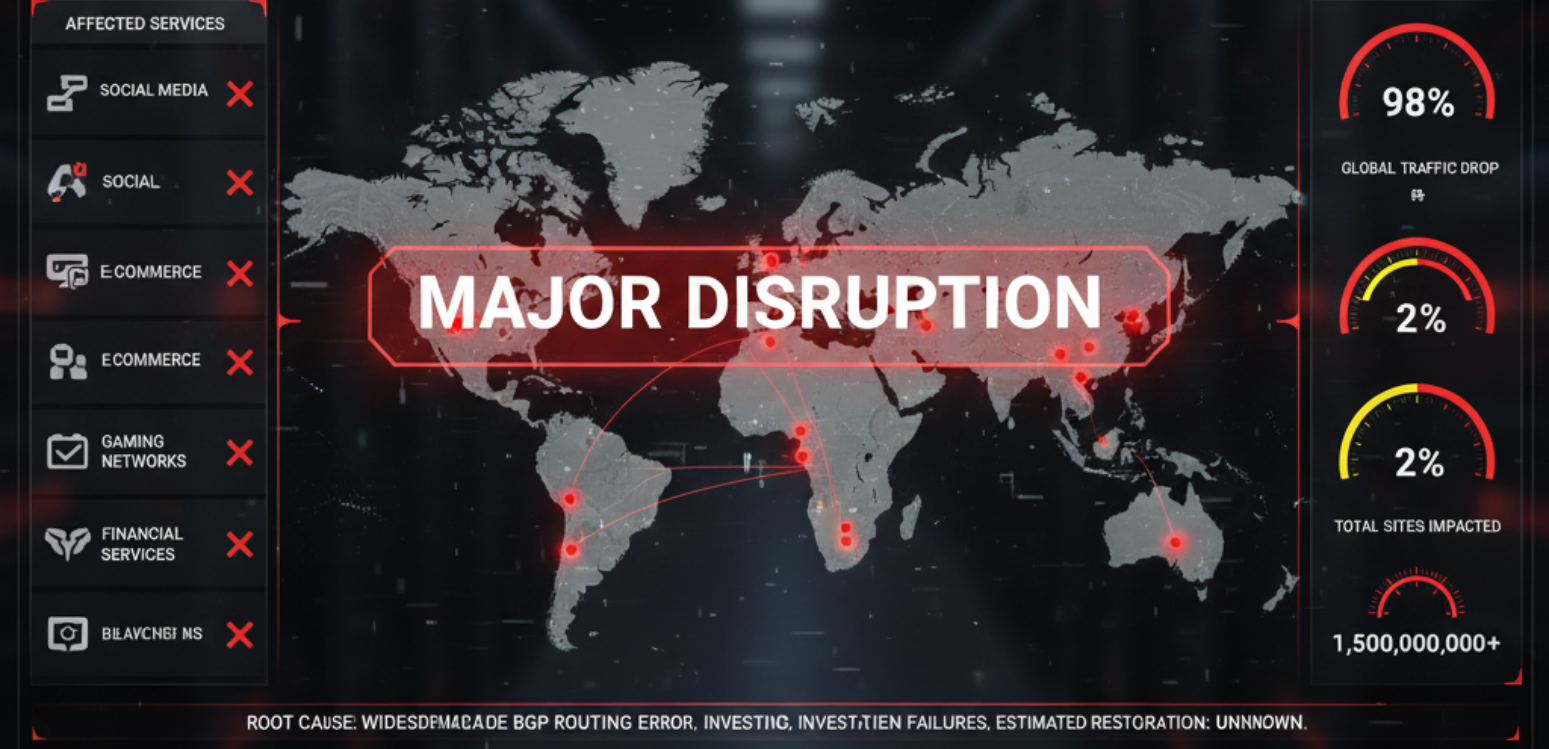
On 18 November 2025, the digital world witnessed one of the most significant service disruptions in recent years when Cloudflare, a core pillar of the internet, experienced a global outage. Known widely as the Cloudflare outage 2025, this incident affected thousands of websites, SaaS platforms, and digital services across continents. For many organizations, the interruption was more than a technical inconvenience; it was a stark reminder of how dependent modern businesses have become on third-party cloud infrastructure.
From overloaded e-commerce stores to frozen dashboards and inaccessible applications, the outage demonstrated how quickly operations can halt when a single link in the digital chain breaks. Understanding what happened and how to prepare for such events is now a priority for every tech-driven company.
What Happened During the Cloudflare Outage 2025
The outage originated from a routine configuration change within Cloudflare’s core network. A permissions error affected a key database cluster, which disrupted edge routing, bot management, and several core security services. As a result, millions of users encountered 5xx errors, slow website responses, and complete downtime across multiple platforms.
Although Cloudflare restored normal service within a few hours, the widespread impact triggered conversations about digital dependency, infrastructure reliability, and the importance of business continuity planning.
Why This Outage Matters
1. Centralization Risks Are Real
Many companies rely on Cloudflare for DNS, CDN, security, and performance enhancements. This is efficient until it isn’t. The outage highlighted what can happen when too many systems depend on a single service provider.
2. Digital Confidence Isn’t Digital Immunity
Cloudflare delivers exceptional performance, but no provider is flawless. The Cloudflare outage 2025 proved that even the strongest infrastructures are vulnerable to human errors, misconfigurations, or unexpected internal chain reactions.
3. Downtime Hurts More Than Traffic
For businesses, outages disrupt:
- Customer trust
- Sales and conversions
- Remote team productivity
- Internal workflows
- SLA commitments
The ripple effect can be far more expensive than the downtime itself.
4. Regulatory and Compliance Risks
Industries handling financial, healthcare, or personal data must maintain strict uptime requirements. Outages can introduce compliance challenges or spark reviews from regulatory bodies.
Key Lessons for IT and Business Teams
1. Diversify Your Cloud and CDN Setup
Single-vendor dependency is risky. Multi-CDN and multi-cloud strategies minimize the impact of outages. Even smaller companies benefit from having backup routing, DNS failover, or alternate caching layers.
2. Implement Intelligent Failover Systems
Design your infrastructure to survive partial failures. Load balancers, automated failover, worker queues, and distributed clusters help ensure continuous service even during upstream issues.
3. Monitor Third-Party Reliability
Keep maps of your dependencies and review their performance, SLA score, downtime history, and security posture. Many organizations realized they were using Cloudflare across too many critical functions without alternatives.
4. Plan for Graceful Degradation
If some services go down, your product should still partly function. For instance, a payment service might pause, but browsing or account access should remain available.
5. Communicate Transparently During Outages
One of the most appreciated things Cloudflare did was publish a detailed breakdown of the event. Companies must similarly maintain clear communication with users during disruptions to preserve trust.
6. Strengthen Business Continuity Planning
Use the Cloudflare outage 2025 as a guide to:
- Update incident-response playbooks
- Run failover drills
- Test emergency communication channels
- Revisit vendor contracts and SLAs
- Ensure team readiness for high-pressure situations
Shifts Expected in 2026 and Beyond
The outage is influencing how companies think about the future of cloud-powered operations:
- Resilience-first architectures will become standard.
- Decentralized and distributed systems will gain popularity.
- Vendor risk assessments will become board-level discussions.
- Automated incident prevention tools will grow rapidly.
The key message is simple: relying on a strong vendor doesn’t replace the need for internal resilience.
Conclusion
The Cloudflare outage 2025 is a powerful reminder that even the most trusted systems can fail unexpectedly. Businesses that prepare for these events through redundancy, proactive monitoring, multi-cloud strategies, and strong communication plans stand stronger during disruptions.
Downtime is not just about lost minutes; it impacts revenue, trust, and operational momentum. The companies that learn from this incident and upgrade their digital resilience will be better positioned for a fast-moving, cloud-dependent future. In a world where the internet supports nearly every workflow, one lesson stands out: reliability must be engineered, not assumed.
Read our recent blogs here – https://demandteq.com/api-security-2025-guide/
