
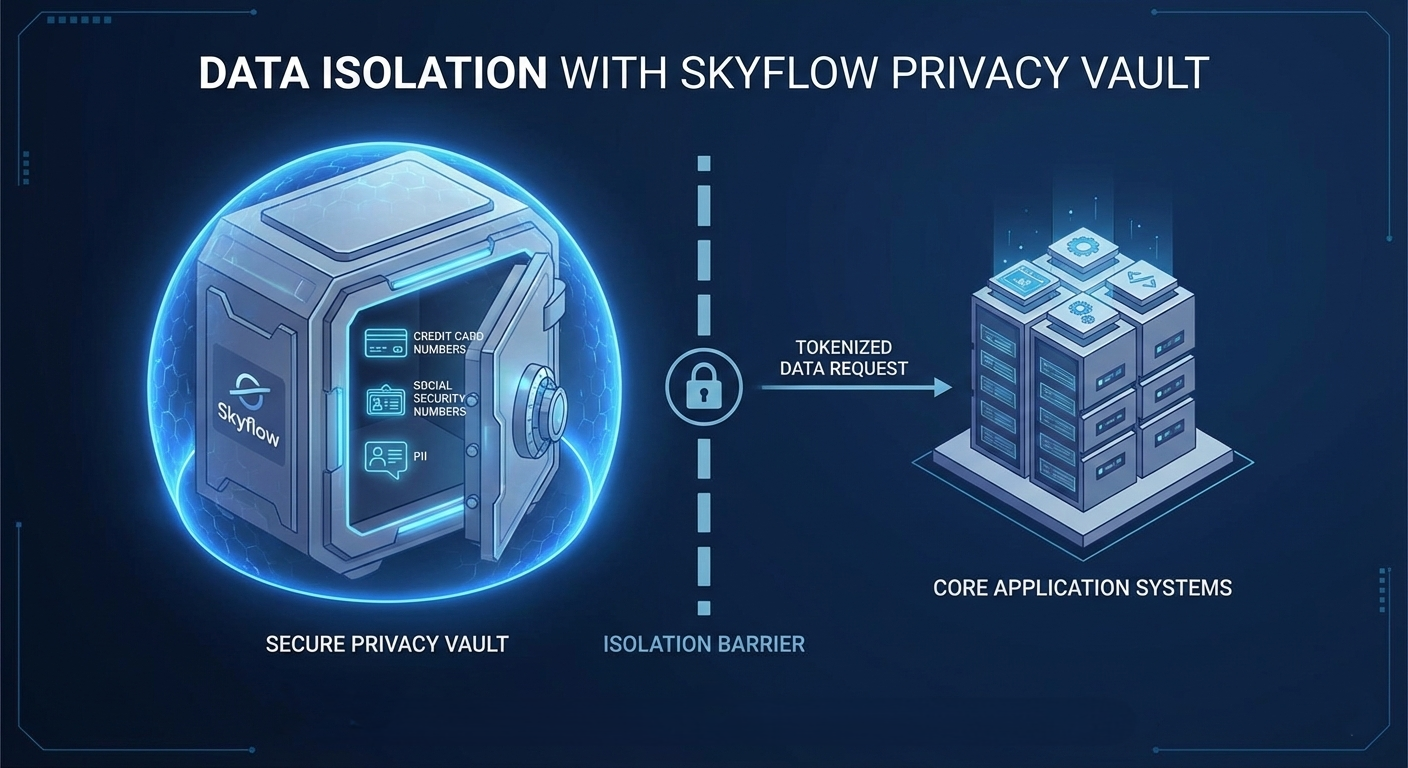
Data has become the backbone of digital businesses. From customer onboarding to payments and personalization, organizations rely heavily on sensitive user information to operate efficiently. However, as data volumes grow, so do concerns around privacy, compliance, and risk exposure. This is where Skyflow Privacy Vault enters the conversation, not as a security add-on, but as a platform that challenges how companies think about storing and using sensitive data.
Rather than asking how to protect data after collecting it, Skyflow encourages organizations to rethink how much data they truly need access to in the first place. This mindset marks a significant shift in modern data architecture.
Why Traditional Data Storage Models Are Breaking Down
Most digital platforms still rely on centralized databases that store personally identifiable information (PII) alongside operational data. While this approach has worked in the past, it creates long-term challenges:
- Expanding compliance requirements across regions
- Increased risk during breaches
- Complex access control for internal teams
- High operational costs to maintain security layers
As companies scale globally, managing privacy across different regulations becomes increasingly complex. The problem isn’t only cybersecurity, it’s data overexposure.
Modern organizations are realizing that limiting access to sensitive data is often more effective than continuously trying to defend it.
How Skyflow Privacy Vault Changes Data Storage Models
Skyflow introduces the concept of a data privacy vault, which separates sensitive data from core business systems. Instead of spreading personal data across applications, it is stored in a secure, isolated environment and referenced only when necessary.
This architectural shift allows companies to:
- Reduce direct exposure to sensitive information
- Simplify compliance with privacy regulations
- Control who can access specific data fields
- Maintain functionality without compromising security
With Skyflow Privacy Vault, sensitive information is isolated by design, reducing unnecessary exposure across applications and teams.
How Privacy-First Architecture Supports Business Agility
One of the lesser-discussed benefits of modern privacy platforms is speed. When sensitive data is isolated, engineering and product teams can build and iterate faster.
For example:
- Developers can work with tokenized data instead of raw PII
- Analytics teams can derive insights without direct access to personal information
- Customer support teams can resolve issues without viewing full sensitive records
By minimizing unnecessary access, organizations reduce internal friction while maintaining trust.
This model aligns well with cloud-native development, where modular systems and APIs are essential.
Compliance Without Constant Reinvention
Global regulations such as GDPR, CCPA, and other emerging data protection laws have shifted responsibility toward organizations to prove accountability. Traditionally, this meant frequent audits, policy updates, and manual reviews.
Skyflow’s architecture supports compliance by design rather than compliance as a reaction. With built-in controls for encryption, access policies, and audit trails, companies can adapt to regulatory changes without restructuring their systems repeatedly. By using Skyflow Privacy Vault, organizations can align privacy controls with evolving regulations without rebuilding their infrastructure repeatedly.
This is particularly valuable for industries like:
- FinTech and payments
- Healthcare and digital health platforms
- E-commerce and subscription services
- SaaS companies handling global user bases
In these sectors, compliance is not optional, it’s foundational.
Reducing Breach Impact Through Data Isolation
No system is entirely immune to cyber threats. However, the impact of a breach depends heavily on what data is accessible. When sensitive information is isolated in a privacy vault, exposure is significantly reduced.
This changes how organizations approach risk management:
- Fewer systems store sensitive data
- Smaller attack surfaces
- Clearer accountability for access
- Faster incident response
Rather than assuming breaches won’t happen, companies design systems that limit damage when they do.
A Cultural Shift in How Teams Handle Data
Beyond technology, platforms like Skyflow encourage a cultural shift. Teams begin asking smarter questions:
- Do we need access to this data?
- Can this process work without exposing personal details?
- How can we design with privacy in mind from the start?
This mindset aligns well with modern product development, where user trust and transparency are becoming competitive advantages.
Organizations that treat privacy as a core design principle, not a legal checkbox, tend to build stronger, more resilient digital products.
Looking Ahead: Privacy as Infrastructure
As digital ecosystems grow more interconnected, privacy can no longer be treated as an afterthought. It must function as part of the infrastructure itself.
Skyflow represents a broader movement toward privacy-native architecture, where data protection is embedded at the system level. This approach allows businesses to scale confidently, innovate responsibly, and meet user expectations without compromising security or agility.
Conclusion
The future of digital platforms depends on how well organizations balance innovation with responsibility. Skyflow’s approach to privacy-first data architecture highlights a growing realization: controlling data access is just as important as securing data storage. By isolating sensitive information and redesigning how systems interact with it, companies can reduce risk, simplify compliance, and move faster in an increasingly regulated digital world.
As data regulations tighten and user awareness grows, businesses that adopt privacy-native infrastructure will be better positioned to build trust, scale globally, and sustain long-term growth. Skyflow’s model reflects this shift, where privacy is not a constraint, but an enabler of smarter, more resilient digital systems. Platforms like Skyflow Privacy Vault demonstrate how privacy-first architecture can support innovation without sacrificing control or compliance.

This is my first time pay a quick visit at here and i am really happy to read everthing at one place
A well-balanced and informative article. The writing feels natural, and the structure helps guide the reader through the topic. I appreciate the focus on clarity and usefulness.
I am continually searching online for articles that can benefit me. Thank you!