
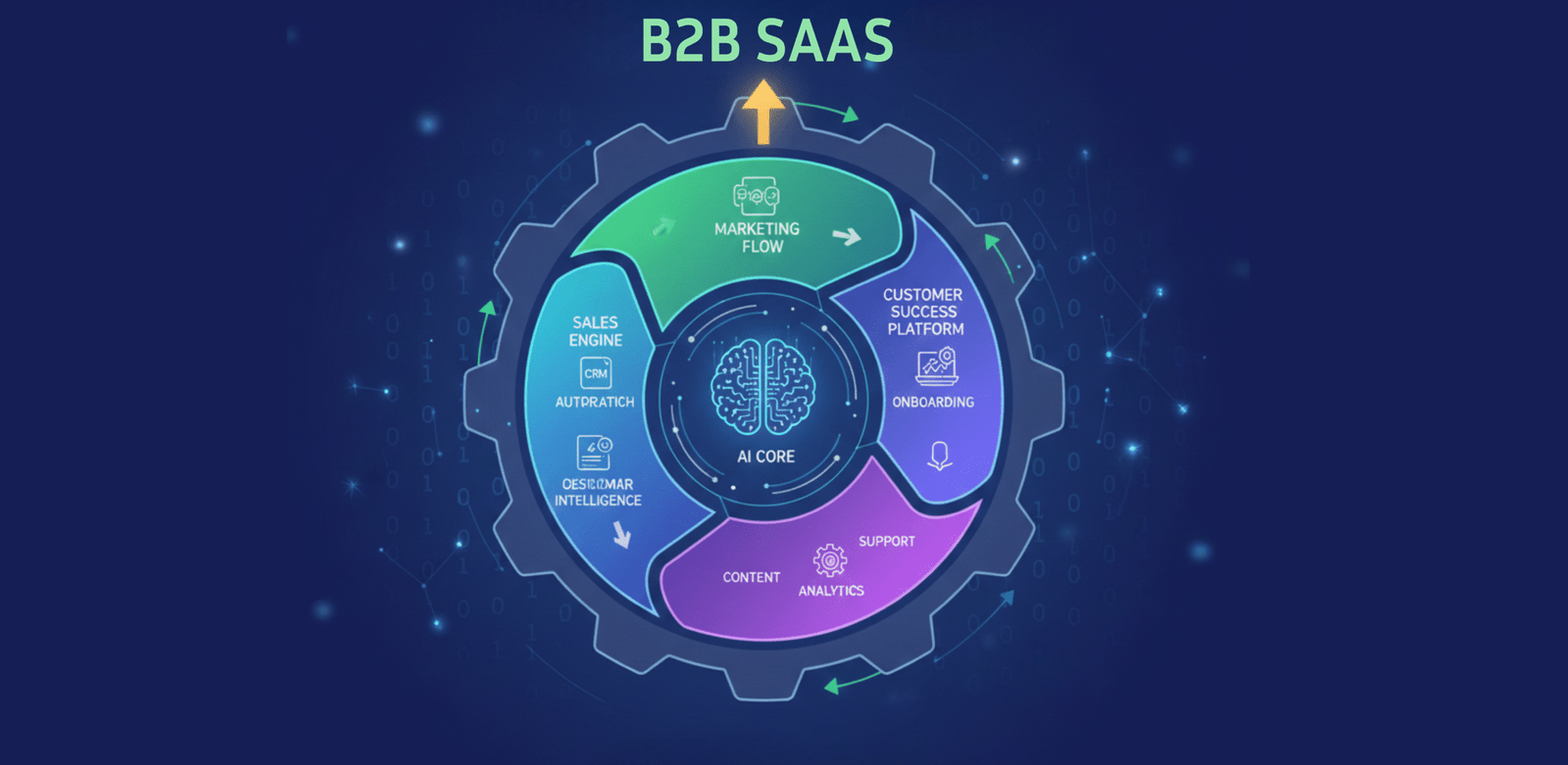
Autonomous revenue systems are rapidly becoming the next major evolution in how B2B SaaS companies drive growth. In 2026, as customer journeys become more complex and data volumes increase, traditional sales and marketing models are struggling to keep up. Manual workflows, disconnected tools, and human-dependent processes can no longer support the speed and personalization that modern buyers expect.
As a result, SaaS leaders are shifting toward autonomous systems that use artificial intelligence, machine learning, and real-time data orchestration to manage revenue operations with minimal human intervention.
What Are Autonomous Revenue Systems?
Autonomous revenue systems are technology frameworks that automatically manage, optimize, and scale revenue-related activities across the customer lifecycle. These systems integrate sales, marketing, customer success, and revenue operations into a single intelligent platform.
Unlike traditional automation tools that rely on predefined rules, autonomous systems continuously learn from customer behavior and adjust strategies in real time. They decide which leads to prioritize, which accounts to target, what messages to send, and when human intervention is required.
In simple terms, autonomous revenue systems act as a digital revenue brain for SaaS organizations.
Why Traditional GTM Models Are Breaking
Most SaaS companies still operate on fragmented go-to-market models. Marketing generates leads, sales qualify them, and customer success manages retention, all using separate tools and data sources.
This creates several challenges:
- Inconsistent customer experiences
- Delayed response times
- Poor lead prioritization
- Limited visibility across the funnel
- Heavy dependence on manual effort
As SaaS markets become more competitive, these inefficiencies directly impact revenue growth. Buyers now expect instant, personalized engagement across multiple channels, something traditional systems cannot deliver at scale.
The Shift Toward Autonomous Revenue Operations
Autonomous revenue systems solve these challenges by creating a unified and intelligent revenue layer. Instead of siloed tools, organizations gain an integrated system that connects:
- CRM platforms
- Marketing automation tools
- Product usage data
- Customer support systems
- Financial and billing data
This allows the system to make real-time decisions based on the full customer context.
For example:
- High-intent accounts can be automatically routed to sales.
- Low-engagement users can receive personalized onboarding flows.
- At-risk customers can trigger proactive retention campaigns.
All without manual configuration.
Core Capabilities of Autonomous Revenue Systems
1. AI-Driven Decision Making
These systems analyze massive datasets to identify patterns humans cannot detect. They predict buying intent, churn risk, upsell opportunities, and customer lifetime value.
2. Real-Time Orchestration
Autonomous platforms coordinate actions across channels such as email, ads, chat, and in-app messaging in real time, ensuring consistent and personalized experiences.
3. Self-Optimizing Workflows
Instead of fixed automation rules, workflows continuously evolve based on performance data. Campaigns automatically improve over time without manual tuning.
4. Revenue Intelligence
Leadership teams gain full visibility into what drives revenue, which channels perform best, and where bottlenecks exist.
Business Impact for B2B SaaS Companies
The adoption of autonomous revenue systems delivers measurable advantages:
- Faster deal cycles
- Higher conversion rates
- Lower customer acquisition costs
- Improved retention and expansion
- Reduced operational overhead
More importantly, these systems allow revenue teams to focus on strategy, creativity, and relationship-building rather than repetitive tasks.
Common Mistakes SaaS Companies Should Avoid
While autonomous systems offer strong benefits, many organizations fail due to poor implementation.
Common mistakes include:
- Treating autonomy as a replacement for human strategy
- Integrating low-quality or incomplete data
- Ignoring customer experience design
- Over-automating without governance
Autonomy works best when combined with a strong revenue strategy and clear business goals.
The Future of SaaS Revenue Is Self-Driving
By 2028, autonomous revenue systems will likely become standard infrastructure for high-growth SaaS companies. Similar to how CRM systems became essential in the 2010s, revenue autonomy will define competitive advantage in the next decade.
Future advancements will include:
- Predictive revenue forecasting
- Fully automated account management
- AI-powered pricing optimization
- Real-time cross-sell orchestration
SaaS organizations that adopt early will gain a significant market edge.
Conclusion
Autonomous revenue systems represent a fundamental shift in how B2B SaaS companies grow. As customer expectations rise and competition intensifies, manual revenue operations will become increasingly unsustainable.
Companies that invest in intelligent, self-optimizing revenue platforms will achieve faster growth, better customer relationships, and long-term scalability in the digital economy.
