
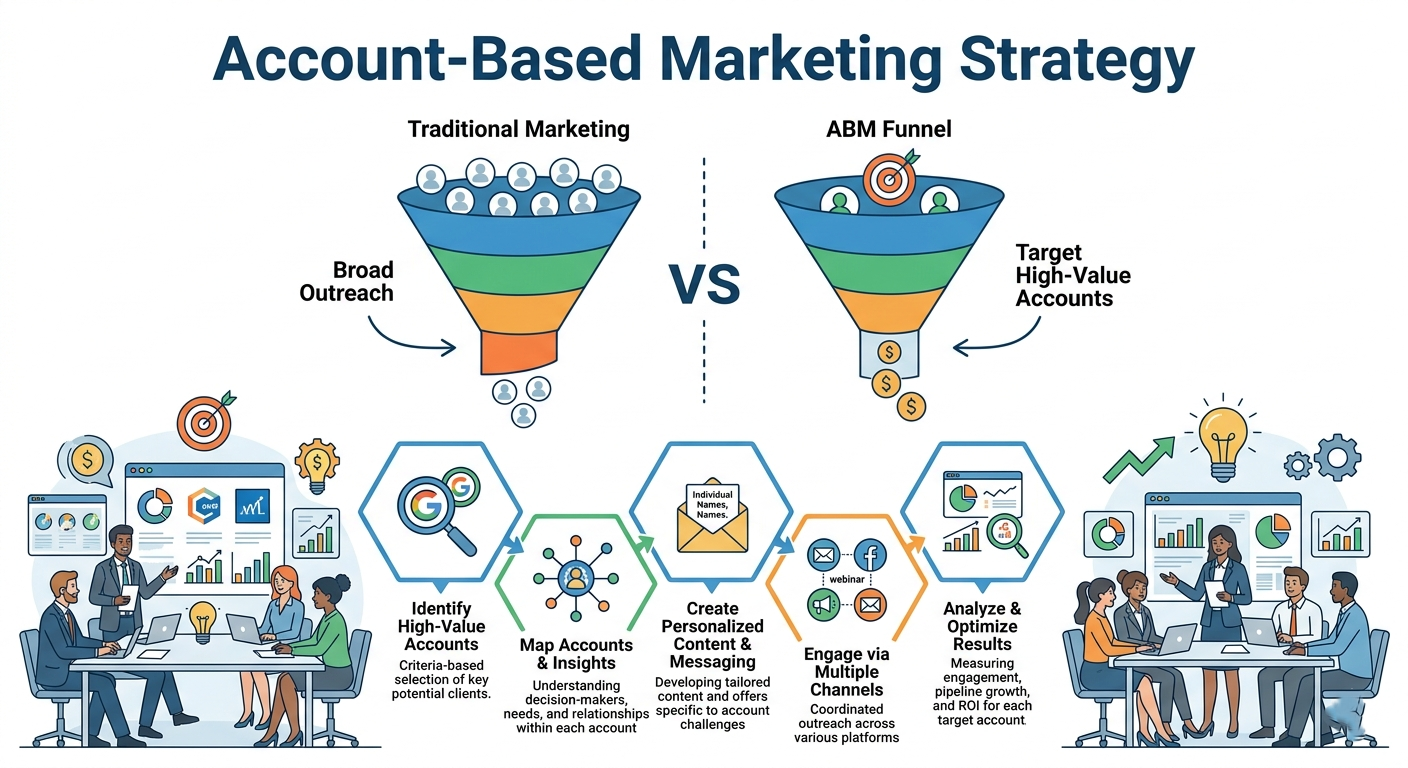
In today’s competitive B2B landscape, traditional marketing approaches are no longer enough. Casting a wide net often leads to wasted resources and low conversion rates. Instead, organizations are shifting toward a more focused and strategic approach to account-based marketing (ABM).
ABM is not about reaching more people; it’s about reaching the right people. By targeting high-value accounts with personalized campaigns, businesses can drive better engagement, stronger relationships, and higher returns.
What Is Account-Based Marketing?
Instead of generic campaigns, ABM focuses on creating tailored messaging and experiences for each account.
This approach aligns marketing efforts with business goals, ensuring that resources are invested where they matter most.
Why ABM Is Gaining Momentum
Higher ROI
ABM campaigns often deliver better returns because they focus on high-value prospects.
Better Alignment Between Sales and Marketing
Both teams collaborate on targeting, messaging, and engagement strategies.
Personalized Engagement
Customized campaigns resonate more with decision-makers.
Shorter Sales Cycles
Targeted efforts help move prospects through the sales funnel faster.
Key Components of a Successful ABM Strategy
Account Selection
Identify high-value accounts based on revenue potential, fit, and strategic importance.
Deep Research
Understand the needs, challenges, and goals of each target account.
Personalized Campaigns
Create tailored content and messaging for each account.
Multi-Channel Engagement
Reach decision-makers through email, social media, events, and direct outreach.
Continuous Measurement
Track performance and optimize campaigns based on results.
The Role of Technology in ABM
Technology plays a crucial role in executing ABM strategies effectively.
Modern tools enable:
- Data-driven account selection
- Campaign automation
- Performance tracking
- Real-time insights
These capabilities help organizations scale ABM efforts while maintaining personalization.
Challenges in ABM Implementation
While ABM offers significant benefits, organizations may face challenges such as:
- Resource-intensive campaign development
- Data accuracy issues
- Alignment between teams
Overcoming these challenges requires strong collaboration and the right technology stack.
The Future of ABM
As B2B marketing evolves, ABM is expected to become even more data-driven and AI-powered. Organizations will increasingly use predictive analytics to identify high-value accounts and personalize engagement at scale.
This evolution will make ABM more efficient and impactful.
Conclusion
In a world where quality matters more than quantity, an account-based marketing strategy offers a powerful way to target and convert high-value customers. By focusing on the right accounts and delivering personalized experiences, businesses can build stronger relationships, improve conversion rates, and drive sustainable growth.
