
Introduction
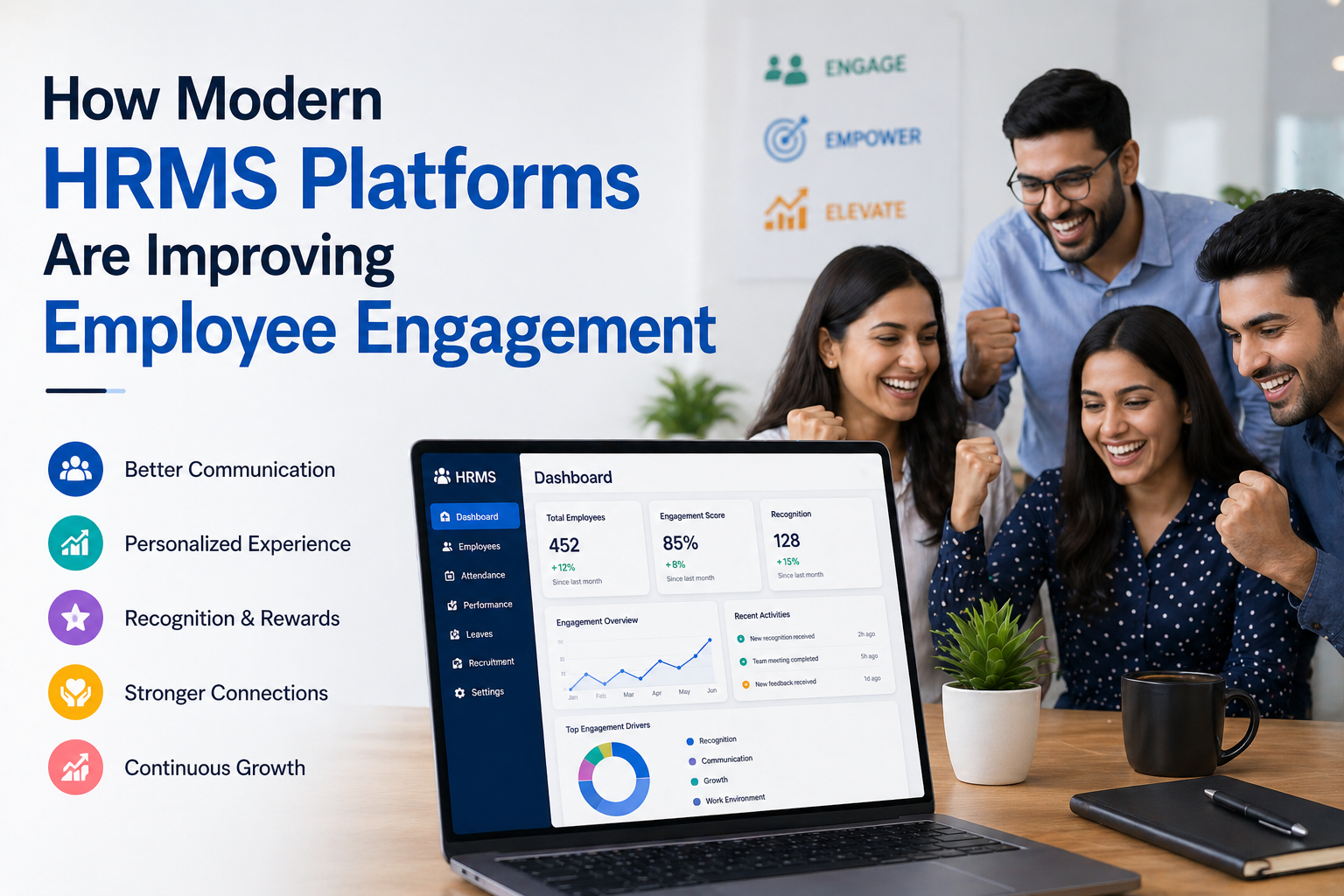
Employee engagement has become a critical factor in business success. In today’s digital workplace, organizations are no longer focused only on productivity—they are prioritizing employee experience, satisfaction, and retention.
Modern HRMS platforms are playing a central role in this shift. By leveraging AI, data analytics, and automation, these systems are helping companies create more engaging and responsive work environments.
Why Employee Engagement Matters More Than Ever
Engaged employees are more productive, more loyal, and more aligned with company goals. However, maintaining engagement has become increasingly complex due to:
- Remote and hybrid work models
- Changing employee expectations
- Increased competition for talent
- Lack of real-time feedback systems
Traditional HR approaches are no longer enough to address these challenges.
The Role of HRMS in Enhancing Employee Engagement
Modern HRMS platforms go beyond administrative functions. They are now designed to actively improve how employees interact with their organization.
1. Real-Time Feedback and Communication
HRMS platforms enable continuous feedback instead of annual performance reviews.
Features include:
- Pulse surveys
- Instant feedback tools
- Communication dashboards
This helps organizations stay connected with employees and respond quickly to concerns.
2. Personalized Employee Experience
AI-powered HRMS systems can tailor experiences based on individual employee data.
This includes:
- Customized learning paths
- Role-based content
- Personalized career development plans
Such personalization increases engagement by making employees feel valued and supported.
3. Recognition and Rewards Systems
Recognition plays a key role in motivation.
Modern HRMS platforms include built-in systems for:
- Peer recognition
- Performance-based rewards
- Achievement tracking
This creates a culture of appreciation within the organization.
4. Data-Driven Engagement Insights
HRMS platforms provide real-time analytics on employee behavior and engagement levels.
Organizations can track:
- Participation rates
- Feedback trends
- Employee sentiment
These insights help HR teams identify issues early and take proactive action.
5. Learning and Development Integration
Continuous learning is essential for engagement.
HRMS platforms integrate learning management systems to:
- Recommend training programs
- Track skill development
- Support career growth
Employees are more engaged when they see opportunities for advancement.
Business Impact of Engagement-Driven HRMS
Companies using modern HRMS platforms are seeing:
- Higher employee retention
- Increased productivity
- Stronger workplace culture
- Better alignment between employees and business goals
Engagement is no longer a soft metric—it directly impacts business performance.
Challenges to Consider
While HRMS platforms offer significant benefits, organizations must address:
- Data privacy concerns
- Adoption resistance from employees
- Integration with existing systems
- Ensuring data accuracy
A well-planned implementation strategy is essential for success.
The Future of Employee Engagement in HRMS
As technology evolves, HRMS platforms will become even more advanced.
Future trends include:
- AI-driven sentiment analysis
- Predictive engagement models
- Deeper personalization
- Integration with collaboration tools
Employee engagement will become more proactive and continuously optimized.
Conclusion
Modern HRMS platforms are transforming employee engagement from a periodic activity into a continuous, data-driven process.
By combining automation, AI, and real-time insights, organizations can create more meaningful employee experiences and build stronger, more productive teams.
In the future of work, engagement will not be managed—it will be intelligently driven.
