
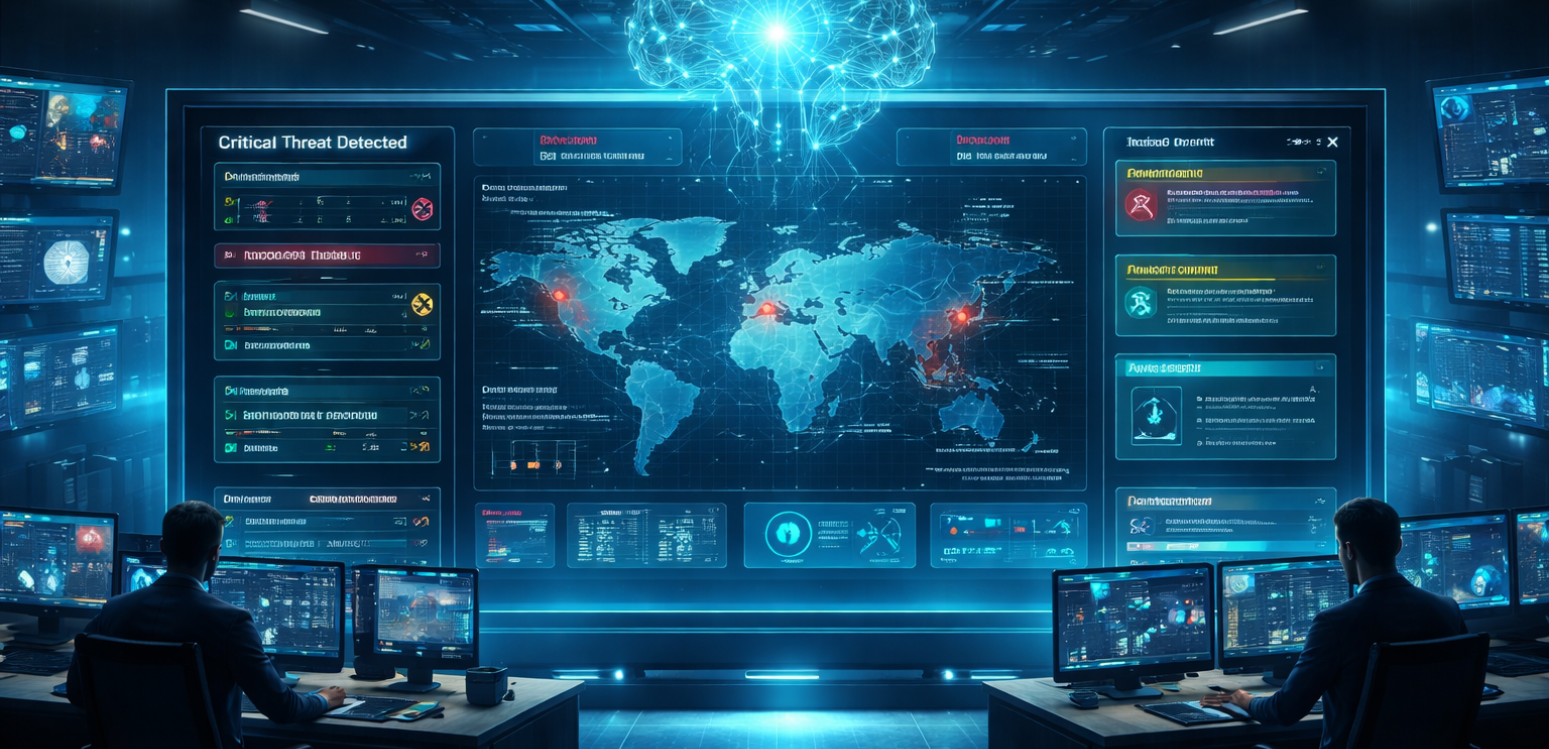
AI-driven incident response is rapidly becoming the backbone of modern enterprise cybersecurity. As cyber threats grow more automated, sophisticated, and persistent, traditional manual response models can no longer keep pace.
In 2026, organizations face a reality where security incidents are not exceptions, they are constants. From ransomware campaigns to identity-based attacks and cloud misconfigurations, the average enterprise experiences thousands of threat signals every day.
The challenge is no longer detecting incidents. The real problem is responding to them fast enough.
This is where AI-driven incident response is redefining how enterprises protect digital assets.
Why Traditional Incident Response Is Breaking Down
For years, incident response relied on human analysts reviewing alerts, investigating logs, and manually executing containment steps.
This approach worked when:
- Attacks were slower
- Environments were smaller
- Threat volumes were manageable
Today, none of that is true.
Modern IT ecosystems span cloud platforms, SaaS tools, remote endpoints, and hybrid networks. A single breach can generate millions of security events within minutes.
Human-led response cannot scale to this level of complexity.
Delays in response now directly translate into:
- Data loss
- Business disruption
- Regulatory penalties
- Brand damage
What Is AI-Driven Incident Response?
AI-driven incident response uses artificial intelligence and machine learning to automatically detect, analyze, prioritize, and respond to cybersecurity incidents.
Instead of waiting for human intervention, AI systems can:
- Identify anomalous behavior
- Correlate threat patterns
- Determine severity
- Trigger automated actions
- Continuously learn from outcomes
The goal is not to replace security teams, but to augment them with autonomous decision-making systems.
AI acts as a real-time security co-pilot.
How AI Is Changing the Incident Response Lifecycle
1. Intelligent Threat Detection
AI models analyze behavioral patterns across endpoints, networks, and identities. They identify threats even when no known signature exists.
This allows enterprises to detect:
- Zero-day exploits
- Insider threats
- Credential abuse
- Lateral movement
Before damage spreads.
2. Automated Investigation
Instead of manual log analysis, AI systems automatically build incident timelines and root cause analysis.
This reduces investigation time from hours to seconds.
Security teams receive contextual insights instead of raw alerts.
3. Autonomous Containment
AI can automatically isolate infected devices, revoke credentials, block malicious IPs, and suspend compromised accounts.
Response actions happen in real time, not after escalation.
This dramatically limits blast radius.
4. Continuous Learning
Every resolved incident improves the system.
AI learns from past attacks and adapts future responses accordingly.
The security system becomes smarter with every threat.
Real-World Adoption: How Enterprises Are Using AI
Enterprises are already adopting AI-driven incident response through platforms offering:
- XDR (Extended Detection and Response)
- MDR (Managed Detection and Response)
- SOAR (Security Orchestration and Automation)
For example, cybersecurity providers like Sophos are embedding AI directly into their incident response services, enabling organizations to combine machine intelligence with human expertise.
This hybrid model delivers:
- 24/7 monitoring
- AI-driven analysis
- Expert-led decision validation
Making enterprise-grade security accessible even for mid-sized organizations.
Business Impact of AI-Driven Response
Organizations adopting AI-driven incident response report:
- Faster mean time to detect (MTTD)
- Faster mean time to respond (MTTR)
- Lower breach costs
- Reduced operational load
- Higher security maturity
Most importantly, security shifts from reactive firefighting to proactive resilience.
Common Mistakes Enterprises Make
One common mistake is treating AI as a magic solution.
AI requires:
- Quality data
- Proper integration
- Continuous tuning
Another mistake is ignoring human oversight. AI should automate execution, not eliminate governance.
The strongest security models combine:
- AI automation
- Human validation
- Policy frameworks
Security remains a strategic discipline, not just a technical one.
The Future of Incident Response
By 2028, most enterprises will operate autonomous security operations centers.
Future capabilities will include:
- Predictive breach prevention
- Self-healing systems
- Risk-based access control
- Real-time compliance enforcement
- Cross-platform security orchestration
Incident response will no longer be a reaction. It will become a continuous, intelligent control system embedded into enterprise infrastructure.
Conclusion
AI-driven incident response is no longer optional. It is becoming the default model for enterprise cybersecurity.
As attack surfaces expand and threat actors become more sophisticated, organizations need security systems that can think, adapt, and act in real time.
The future of enterprise IT security is autonomous, intelligent, and continuously evolving and AI-driven incident response sits at the center of that transformation.

For the reason that the admin of this site is working, no uncertainty very quickly it will be renowned, due to its quality contents.