
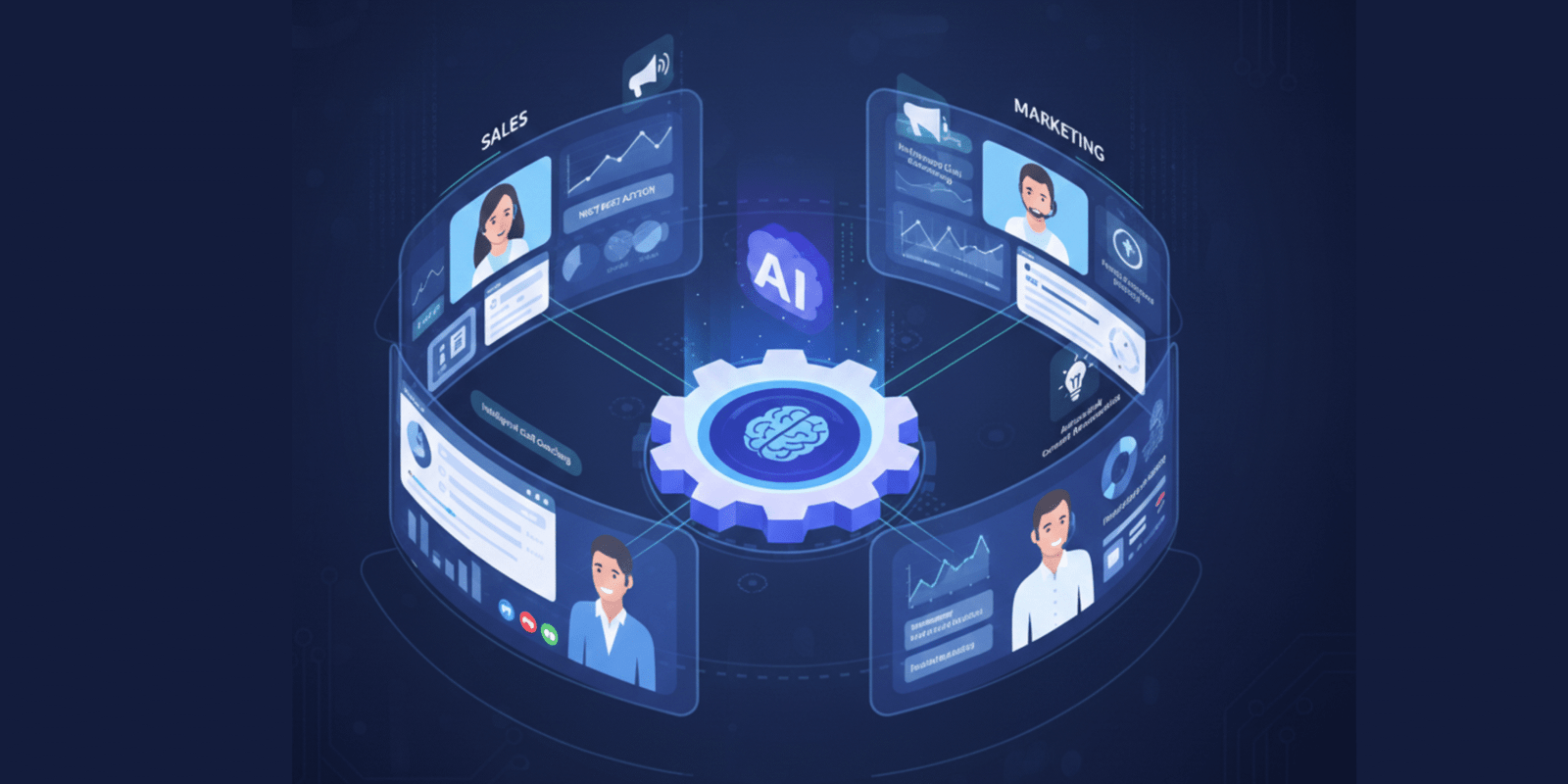
AI in sales enablement has become a critical growth driver for modern SaaS companies, especially as remote selling becomes the default operating model. In 2026, most B2B sales teams no longer rely on physical offices, in-person coaching, or manual content distribution. Instead, they operate in fully digital environments where performance depends on intelligent systems that guide, coach, and support reps in real time.
Traditional sales enablement focused on static training materials, periodic coaching sessions, and manual reporting. However, these approaches struggle in remote setups where managers cannot observe calls, track engagement, or personalize support at scale.
This is where AI is fundamentally changing the sales enablement landscape.
Why Remote Sales Needs AI Support
Remote sales teams face unique challenges:
- Limited visibility into rep performance
- Inconsistent messaging across teams
- Low engagement with training content
- Delayed feedback cycles
- High onboarding costs
AI in sales enablement addresses these issues by creating continuous, intelligent feedback loops.
Instead of relying on monthly reviews or manual dashboards, managers receive real-time insights into how reps communicate, engage prospects, and move deals forward.
Key Areas Where AI Is Transforming Sales Enablement
1. AI-Powered Sales Coaching
AI systems analyze call recordings, emails, and chat conversations to identify patterns. They highlight strengths, detect skill gaps, and recommend personalized coaching tips.
Reps receive instant feedback on:
- Talk-to-listen ratios
- Objection handling
- Deal risk indicators
- Buyer sentiment
This turns coaching into a daily, automated process rather than a quarterly activity.
2. Intelligent Content Recommendations
AI in sales enablement ensures that reps always have the right content at the right moment. Instead of searching through large content libraries, AI recommends assets based on:
- Deal stage
- Buyer persona
- Industry context
- Historical performance
As a result, reps spend less time searching and more time selling.
3. Predictive Deal Intelligence
AI models evaluate historical deal data to predict:
- Which opportunities are likely to close
- Which accounts need attention
- Which deals are at risk
This helps sales teams prioritize their efforts effectively, especially in large remote pipelines.
4. Automated Onboarding and Training
Remote onboarding is one of the biggest challenges in modern sales. AI-driven enablement platforms personalize training paths based on:
- Role
- Experience level
- Skill gaps
- Performance metrics
New reps become productive faster without overwhelming managers.
Business Impact for SaaS Companies
Organizations using AI in sales enablement report:
- Higher win rates
- Shorter sales cycles
- Improved rep productivity
- Better content utilization
- Stronger forecast accuracy
More importantly, AI creates a scalable enablement model that works regardless of team size or geography.
What AI Will Not Replace
Despite its power, AI does not replace:
- Human relationships
- Emotional intelligence
- Strategic decision-making
- Complex negotiations
Instead, AI acts as a performance amplifier for human sellers.
The best results come when AI handles analysis and automation while humans focus on trust, creativity, and problem-solving.
Common Mistakes to Avoid
Many companies fail to extract value from AI due to:
- Poor data quality
- Over-automation
- Lack of rep adoption
- Treating AI as a monitoring tool instead of a coaching tool
AI in sales enablement must be positioned as a support system, not a surveillance system.
The Future of Sales Enablement Is Intelligent
By 2028, most sales enablement platforms will be fully AI-native. Future capabilities will include:
- Real-time deal simulations
- Emotion detection during calls
- Dynamic pricing recommendations
- Autonomous follow-up execution
Sales teams will operate with digital copilots that guide every interaction.
Conclusion
AI in sales enablement is no longer optional for remote teams. It has become a core infrastructure layer for modern SaaS growth, enabling organizations to scale coaching, content, and performance management without increasing operational complexity.
As remote selling continues to dominate, companies that invest in intelligent enablement systems will build stronger sales cultures, reduce ramp-up time, and create more consistent customer experiences.
In the long run, AI will not replace sales professionals, but it will redefine how they work. The most successful teams in 2026 and beyond will be those that combine human expertise with AI-driven insights to drive sustainable, predictable revenue.
