
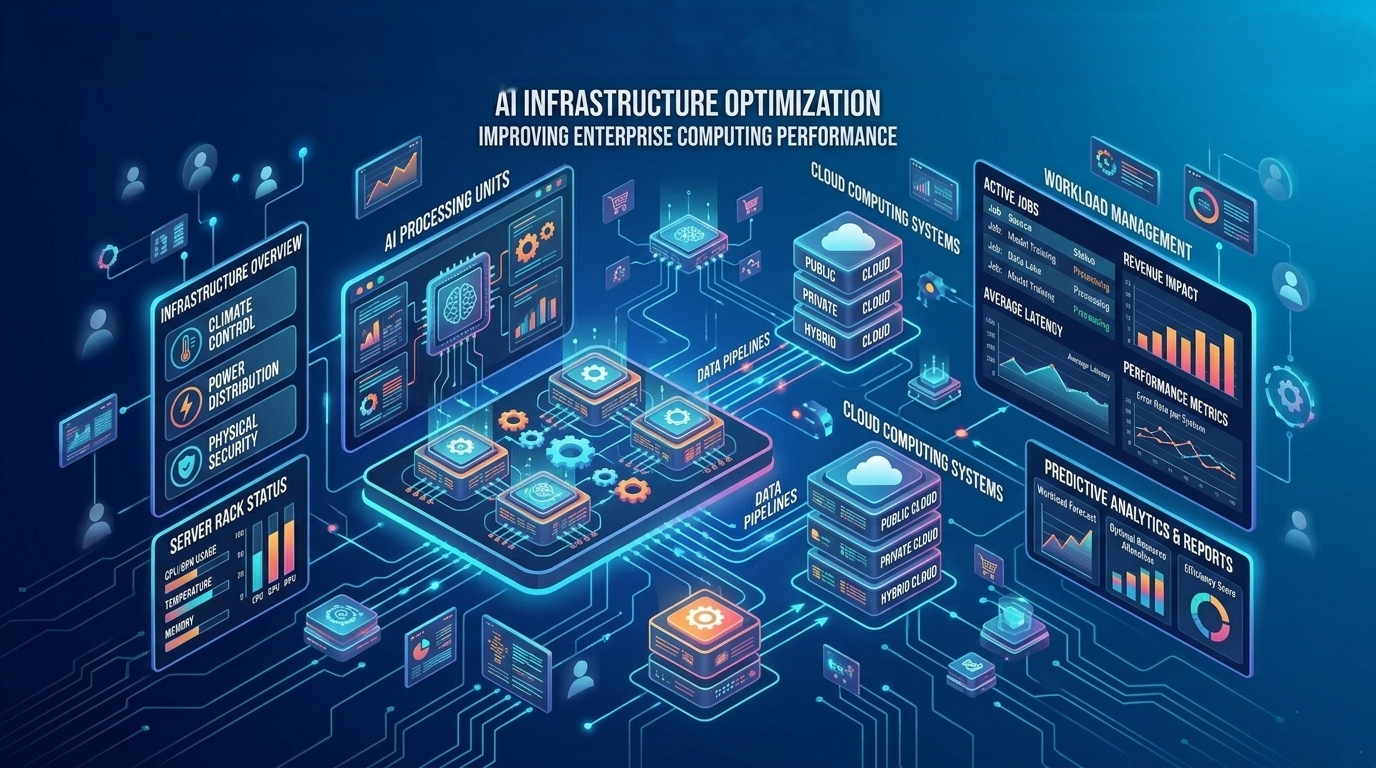
Artificial intelligence adoption is accelerating across industries, but many organizations face a new challenge once their AI initiatives begin to scale managing the infrastructure required to support these workloads. Training machine learning models, processing large datasets, and running real-time analytics demand significant computing power and resources. This is where AI infrastructure optimization becomes essential. Businesses must ensure that their computing environments are efficient, scalable, and capable of supporting increasingly complex AI workloads without high costs or operational inefficiencies.
As enterprises move deeper into the AI era, optimising infrastructure is as important as developing AI models.
What Is AI Infrastructure Optimization?
AI infrastructure optimization is the process of improving the performance, efficiency, and scalability of systems that support artificial intelligence workloads. These systems typically include cloud platforms, GPUs, data storage, networking components, and machine learning platforms.
Unlike traditional IT infrastructure, AI workloads require massive parallel processing, high-speed data access, and scalable compute environments. Optimization ensures these resources are used efficiently while maintaining performance.
Modern organizations rely on a mix of cloud services, edge systems, and on-premise environments to run AI applications. Optimizing this infrastructure helps businesses maintain reliability while controlling operational costs.
Why AI Workloads Require Specialized Infrastructure
AI workloads are fundamentally different from traditional business applications. Standard enterprise systems focus primarily on transaction processing and data storage. AI environments, however, demand high-performance computing capabilities.
Several factors drive the need for optimized infrastructure.
Large-Scale Data Processing
AI models rely on enormous datasets for training and analysis. Handling these datasets efficiently requires optimized storage architectures and high-speed data pipelines.
High Computational Demand
Training machine learning models requires powerful hardware, particularly GPUs and specialized AI accelerators capable of handling parallel workloads.
Continuous Model Updates
AI systems must be retrained regularly as new data becomes available. This creates additional infrastructure demands that must be managed effectively.
Without proper optimization, organizations risk slow performance, increased cloud costs, and reduced operational efficiency.
Key Components of AI Infrastructure Optimization
Organizations aiming to optimize their AI infrastructure must focus on several critical areas.
Efficient Compute Resource Allocation
Proper allocation of GPUs, CPUs, and memory ensures that AI workloads receive the resources they need without wasting capacity.
Dynamic resource allocation tools allow enterprises to scale computing resources automatically based on workload demand.
Data Pipeline Optimization
AI models depend on fast, reliable data pipelines. Optimizing how data is collected, processed, and delivered to AI systems improves model training speed and accuracy.
Scalable Cloud Architecture
Cloud platforms provide the flexibility required for large-scale AI operations. However, poorly configured environments can lead to unnecessary spending.
Optimized cloud architectures help enterprises balance performance and cost while maintaining scalability.
AI Workload Monitoring
Continuous monitoring ensures infrastructure performance remains stable as workloads evolve. Monitoring tools can identify bottlenecks and recommend improvements.
Benefits of Optimizing AI Infrastructure
Organizations that invest in AI infrastructure optimization gain several competitive advantages.
Lower Operational Costs
Efficient infrastructure reduces unnecessary resource consumption and helps businesses manage cloud spending more effectively.
Faster Model Training
Optimized environments allow data scientists to train machine learning models more quickly, accelerating innovation.
Improved System Reliability
Well-designed infrastructure reduces downtime and ensures AI systems operate consistently.
Better Scalability
As AI adoption grows, optimized infrastructure enables organizations to expand their capabilities without major disruptions.
Challenges Organizations Must Address
Despite its benefits, implementing AI infrastructure optimization can present several challenges.
Infrastructure Complexity
AI environments often involve multiple cloud platforms, tools, and frameworks, making optimization more complex.
Talent Shortages
Organizations require skilled engineers who understand both AI development and infrastructure management.
Integration with Existing Systems
Legacy infrastructure may not always support modern AI workloads, requiring upgrades or hybrid solutions.
However, organizations that address these challenges early can build a stronger foundation for future AI initiatives.
The Future of Enterprise AI Infrastructure
Enterprises that focus on AI infrastructure optimization today will be better prepared to scale their AI capabilities tomorrow.
The ability to run AI workloads efficiently will become a key differentiator for organizations seeking to innovate faster and compete in data-driven markets.
Conclusion
Artificial intelligence is transforming industries, but its success depends heavily on the infrastructure supporting it. AI infrastructure optimization enables organizations to improve performance, control costs, and scale AI workloads effectively.
By investing in efficient computing environments, optimized data pipelines, and scalable cloud architectures, enterprises can unlock the full potential of their AI initiatives.
As AI adoption continues to grow, infrastructure optimization will play a critical role in helping businesses turn AI innovation into long-term competitive advantage.
