
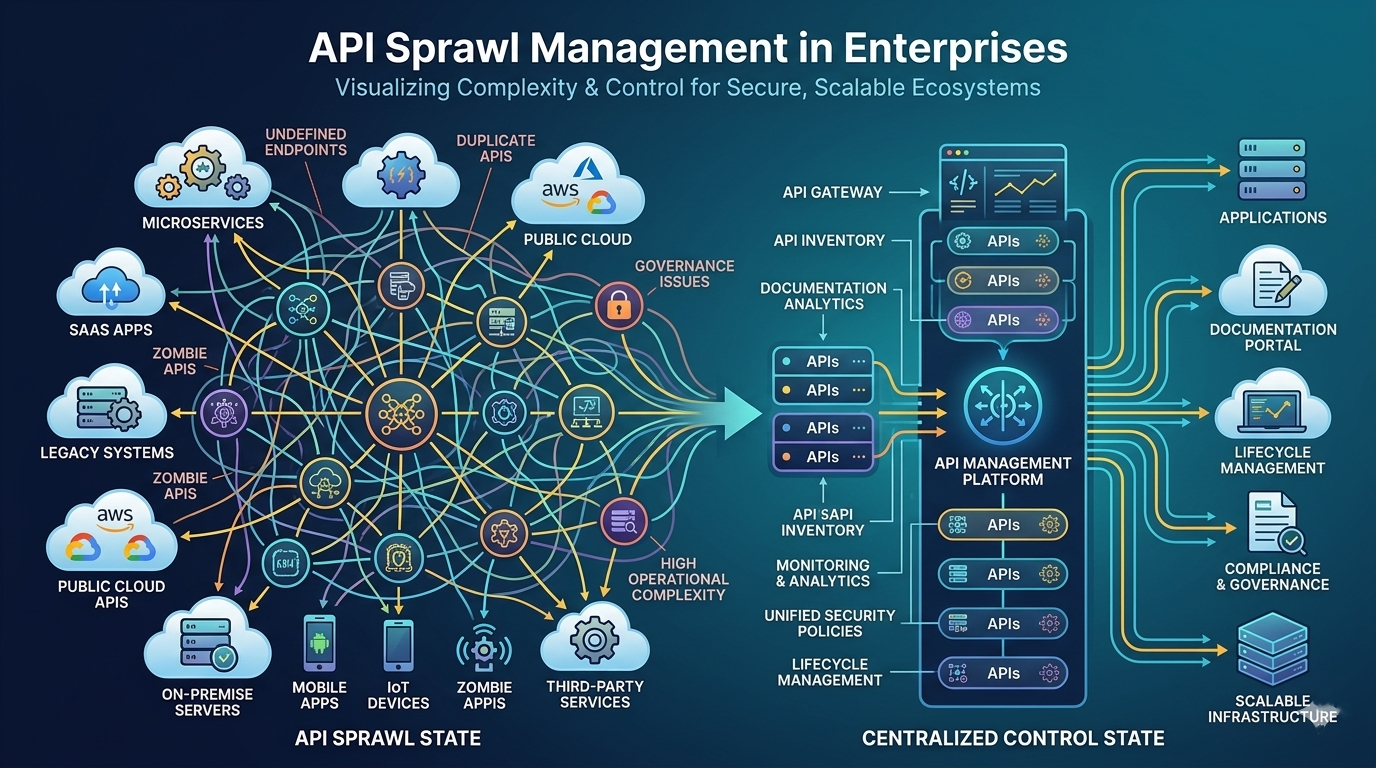
Modern enterprises are rapidly adopting digital technologies to improve efficiency, enhance customer experiences, and scale operations. At the center of this transformation lies the widespread use of APIs (Application Programming Interfaces). APIs allow different systems, applications, and services to communicate seamlessly. However, as organizations continue to expand their digital ecosystems, a new challenge has emerged API sprawl in enterprises.
API sprawl is the uncontrolled proliferation of APIs across systems, teams, and environments. While APIs enable innovation, unmanaged expansion can lead to security vulnerabilities, operational inefficiencies, and governance issues.
What Is API Sprawl in Enterprises?
API sprawl in enterprises occurs when organisations create and deploy numerous APIs without adequate visibility, control, or documentation.
As development teams work independently, APIs are often created for specific use cases without considering long-term management. Over time, this results in hundreds or even thousands of APIs that are difficult to track and manage.
This lack of central oversight makes it challenging for organizations to maintain consistency, security, and performance across their API ecosystem.
Why API Sprawl Is Growing Rapidly
The rise of API sprawl in enterprises is driven by several factors related to modern software development and digital transformation.
Increased Adoption of Microservices
Microservices architecture encourages the creation of smaller, independent services, each often connected through APIs. While this improves scalability, it also increases the number of APIs.
Cloud and Multi-Cloud Environments
Organizations using multiple cloud platforms often develop APIs for integration, further contributing to API growth.
Faster Development Cycles
Agile and DevOps practices prioritize speed, leading to rapid API creation without always ensuring proper governance.
Third-Party Integrations
Businesses increasingly rely on third-party tools and platforms, which require additional APIs for connectivity.
Risks Associated with API Sprawl
Uncontrolled API sprawl in enterprises can create significant challenges.
Security Vulnerabilities
Unmanaged APIs can become entry points for cyberattacks. Without proper authentication and monitoring, attackers may exploit exposed endpoints.
Lack of Visibility
Organizations may not have a complete inventory of their APIs, making it difficult to monitor usage and detect issues.
Data Exposure Risks
APIs often handle sensitive data. Poorly secured APIs can lead to data leaks and compliance issues.
Operational Complexity
Managing a large number of APIs increases complexity for IT teams, slowing down development and troubleshooting processes.
How Enterprises Can Manage API Sprawl
Addressing API sprawl in enterprises requires a strategic approach that combines governance, tools, and best practices.
Centralized API Management
Implementing a centralized API management platform helps organizations track, monitor, and control all APIs from a single interface.
API Inventory and Documentation
Maintaining a comprehensive inventory ensures that all APIs are accounted for and properly documented.
Strong Security Policies
Applying consistent authentication, authorization, and encryption standards helps protect APIs from threats.
Lifecycle Management
Managing APIs throughout their lifecycle from development to deprecation ensures better control and reduces redundancy.
Monitoring and Analytics
Continuous monitoring helps detect unusual activity, performance issues, and potential security risks.
The Role of API Gateways
API gateways play a critical role in managing API sprawl in enterprises. They act as a centralized entry point for all API requests, enabling organizations to enforce security policies, monitor traffic, and manage access.
By using API gateways, enterprises can gain better visibility and control over their API ecosystem.
Future Trends in API Management
As organizations continue to scale their digital operations, API management strategies are evolving.
AI-Driven API Monitoring
Artificial intelligence is being used to detect anomalies and predict potential API failures.
Zero Trust API Security
Zero trust principles are being applied to APIs, ensuring that every request is verified before access is granted.
Automation in API Governance
Automation tools are helping organizations enforce policies and manage APIs more efficiently.
Conclusion
APIs are essential for modern digital transformation, but their uncontrolled growth can create serious challenges. API sprawl in enterprises is becoming a hidden risk that organizations can no longer ignore.
By implementing strong governance, centralized management, and robust security practices, businesses can turn their API ecosystem into a strategic advantage rather than a liability. As digital ecosystems continue to expand, managing API sprawl effectively will be critical for maintaining security, efficiency, and scalability.
