
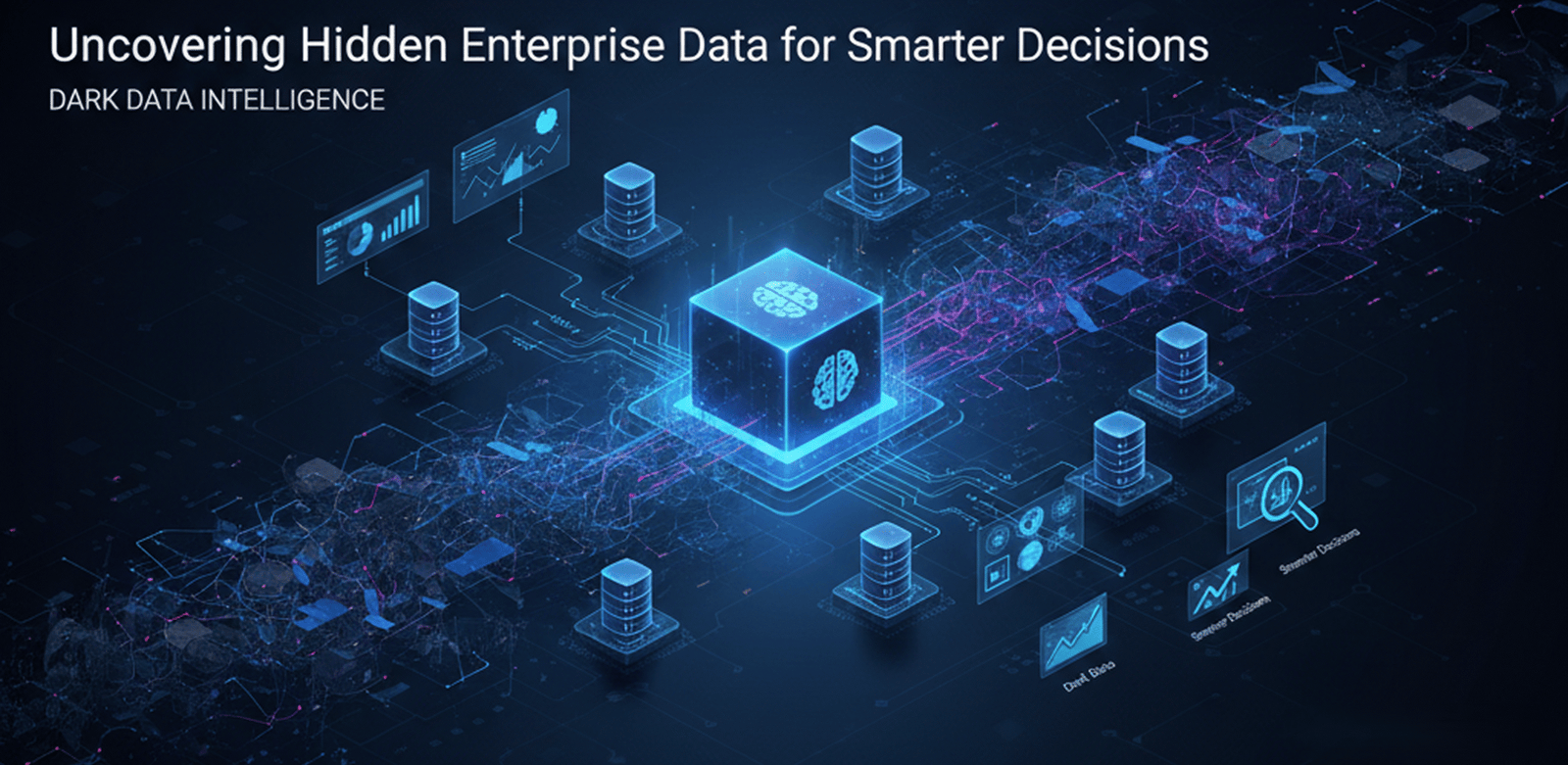
Dark data is becoming one of the most overlooked assets in modern enterprises. In 2026, organizations generate massive volumes of information, yet a large portion remains unused, unprocessed, and often ignored.
This hidden layer of enterprise data holds significant potential. While businesses invest heavily in analytics and AI, they often miss the opportunity to leverage the data they already possess. Unlocking this unused information can lead to better insights, improved efficiency, and stronger competitive positioning.
What Is Dark Data?
Dark data refers to information that organizations collect, process, and store but do not actively use for analytics or decision-making.
This includes:
- Emails and internal communications
- System logs and machine data
- Customer interaction records
- IoT-generated data
- Archived files and documents
According to industry insights, a large percentage of enterprise data remains unused despite its potential value.
Why Unused Data Is Growing Rapidly
The rapid expansion of digital systems has led to an explosion of unused enterprise data.
Organizations today operate across:
- Cloud platforms
- Enterprise applications
- Customer touchpoints
- Connected devices
However, not all data is structured or easy to analyze. Without proper systems in place, businesses end up storing information without using it effectively.
The Hidden Risks of Ignoring Dark Data
Ignoring unused enterprise data is not just a missed opportunity it also introduces risks.
Security Vulnerabilities
Unmonitored data can become an easy target for cyber threats.
Compliance Challenges
Regulations require organizations to manage and secure all stored data, not just the data they actively use.
Increased Storage Costs
Storing large volumes of unused information leads to higher infrastructure costs without delivering value.
Unlocking the Value of Hidden Data Assets
Enterprises that tap into unused data can unlock meaningful business advantages.
Better Decision-Making
Hidden patterns can support more informed strategic decisions.
Deeper Customer Insights
Unstructured data reveals customer behavior, preferences, and expectations.
Improved Operational Efficiency
Analyzing system-generated data can highlight inefficiencies and areas for optimization.
New Innovation Opportunities
Untapped information can lead to new products, services, or business models.
How Enterprises Can Activate Dark Data
Turning unused data into a valuable asset requires a structured approach.
1. Data Discovery
Identify what data exists across systems and repositories.
2. Data Classification
Organize information by relevance and usability.
3. AI and Advanced Analytics
Use AI tools to process unstructured data and extract insights.
4. Data Governance
Ensure proper policies for security, compliance, and usage.
The Role of AI in Data Activation
Artificial intelligence is playing a key role in transforming unused data into actionable insights.
AI enables organizations to:
- Process large volumes of unstructured information
- Detect patterns and anomalies
- Automate data categorization
- Generate predictive insights
This shift helps businesses move from passive storage to active intelligence.
Common Mistakes to Avoid
One major mistake is assuming all unused data is valuable.
Organizations must focus on relevant, high-impact information rather then analyzing everything.
Another mistake is ignoring governance. Without proper controls, leveraging hidden data can create compliance and security issues.
The Future of Enterprise Data Strategy
Looking ahead, enterprises will increasingly focus on activating unused data.
toggle trends include:
- Automated data discovery
- AI-driven insights
- Real-time data utilization
- Stronger regulatory frameworks
Businesses that act early will gain a clear competitive advantage.
Conclusion
Dark data represents one of the most significant untapped opportunities in the enterprise landscape. While organizations continue to invest in advanced analytics, a large portion of their data remains unused and unexplored.
Unlocking this potential requires a shift in mindset, from simply storing information to actively discovering and using it. Enterprises that take this step will gain deeper insights, improve operational efficiency, and unlock new growth opportunities.
In a data-driven world, success is no longer defined by how much data you collect, but by how effectively you use it.
The organizations that bring hidden data into the spotlight today will lead tomorrow.
