
Event-driven architecture is rapidly transforming how modern enterprises build and manage digital systems. In a world where speed and responsiveness define success, traditional workflows are no longer sufficient.
Businesses today operate in real time, customers expect instant responses, systems must react immediately, and data needs to flow continuously. This shift is pushing organizations to adopt architectures that can handle dynamic, real-time events efficiently.
What Is Event-Driven Architecture?
Event-driven architecture (EDA) is a design approach where systems respond to events as they occur.
An event can be:
- A user action (click, purchase)
- A system update
- A data change
Instead of relying on scheduled processes or batch updates, EDA enables systems to react instantly.
Why Traditional Workflows Are Falling Behind
Traditional systems rely heavily on batch processing and linear workflows.
These approaches often result in:
- Delayed data processing
- Slower decision-making
- Limited scalability
As businesses grow, these limitations become more visible, especially in industries that require real-time insights.
Benefits of Event-Driven Architecture
Real-Time Responsiveness
Systems can react immediately to events, improving speed and efficiency.
Scalability
Components can scale independently based on event load.
Flexibility
New services can be added without disrupting existing systems.
Improved Customer Experience
Faster responses lead to better user satisfaction.
Key Components of Event-Driven Systems
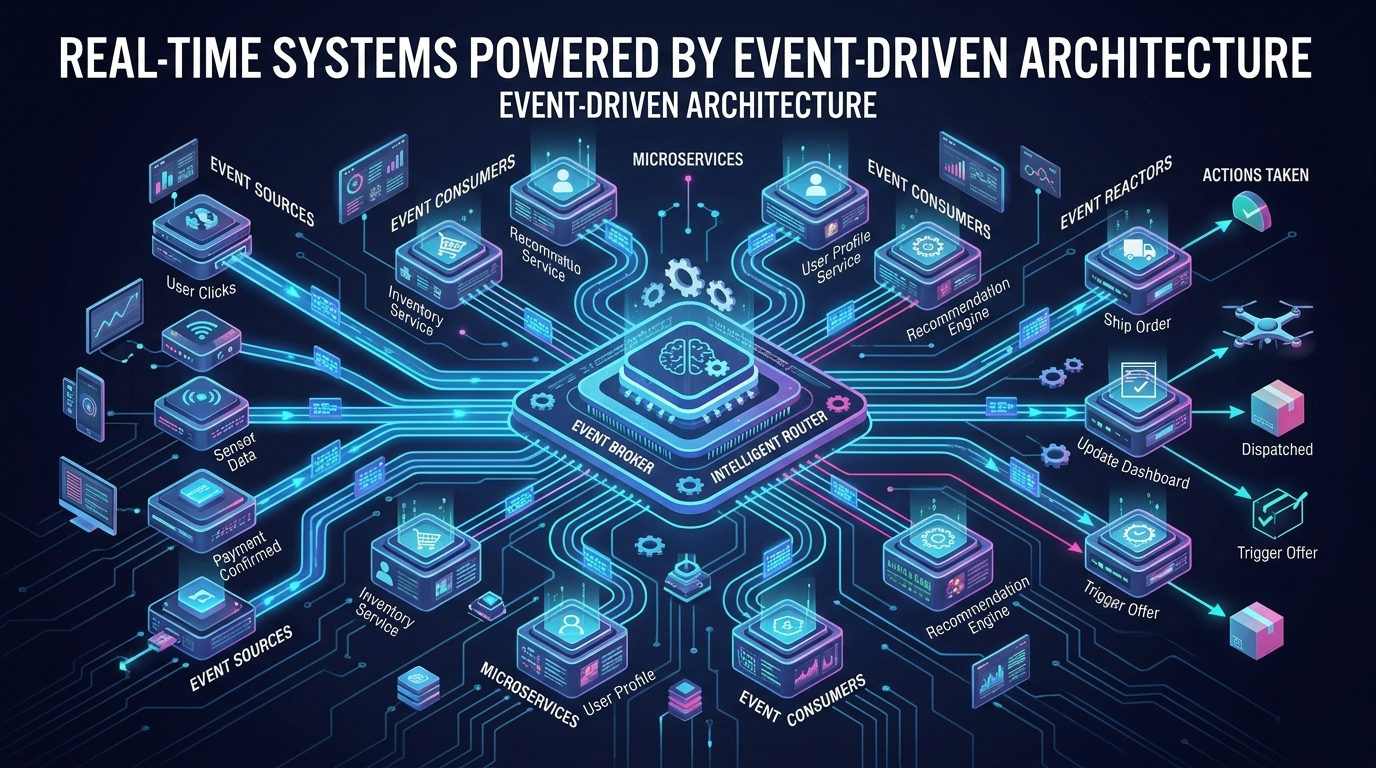
Event Producers
These generate events, such as applications or sensors.
Event Consumers
These respond to events and perform actions.
Event Brokers
These manage the flow of events between producers and consumers.
Real-World Use Cases
E-commerce
Instant order updates, inventory management, and personalized recommendations.
Financial Services
Real-time fraud detection and transaction processing.
Healthcare
Monitoring patient data and triggering alerts instantly.
Logistics
Tracking shipments and updating delivery status in real time.
Challenges to Consider
System Complexity
Managing multiple event streams can be complex.
Data Consistency
Ensuring consistency across distributed systems requires careful design.
Monitoring
Tracking events in real time requires advanced tools.
How to Implement Event-Driven Architecture
Start Small
Begin with a single use case before scaling across systems.
Use Reliable Messaging Systems
Adopt platforms that support real-time event streaming.
Focus on Integration
Ensure seamless communication between components.
Monitor Continuously
Track system performance and event flows.
Common Mistakes to Avoid
One mistake is overcomplicating the system from the start.
Another is ignoring monitoring, which can lead to unnoticed failures in event processing.
The Future of Real-Time Systems
The demand for real-time systems will continue to grow.
Key trends include:
- Integration with AI and automation
- Increased use of streaming platforms
- Real-time analytics at scale
- Autonomous system responses
Enterprises that adopt event-driven architecture early will be better positioned to compete.
Conclusion
Event-driven architecture is redefining how businesses build scalable and responsive systems. By enabling real-time data processing and instant reactions, it allows organizations to move faster and operate more efficiently.
As digital ecosystems become more dynamic, the need for real-time capabilities will only increase. Traditional workflows are no longer enough to meet modern demands.
Enterprises that embrace this shift will not only improve performance but also deliver better customer experiences and unlock new opportunities for growth.
In the future, success will belong to organizations that can respond instantly, and event-driven architecture makes that possible.

You’re so awesome! I don’t believe I have read a single thing like that before. So great to find someone with some original thoughts on this topic. Really.. thank you for starting this up. This website is something that is needed on the internet, someone with a little originality!