
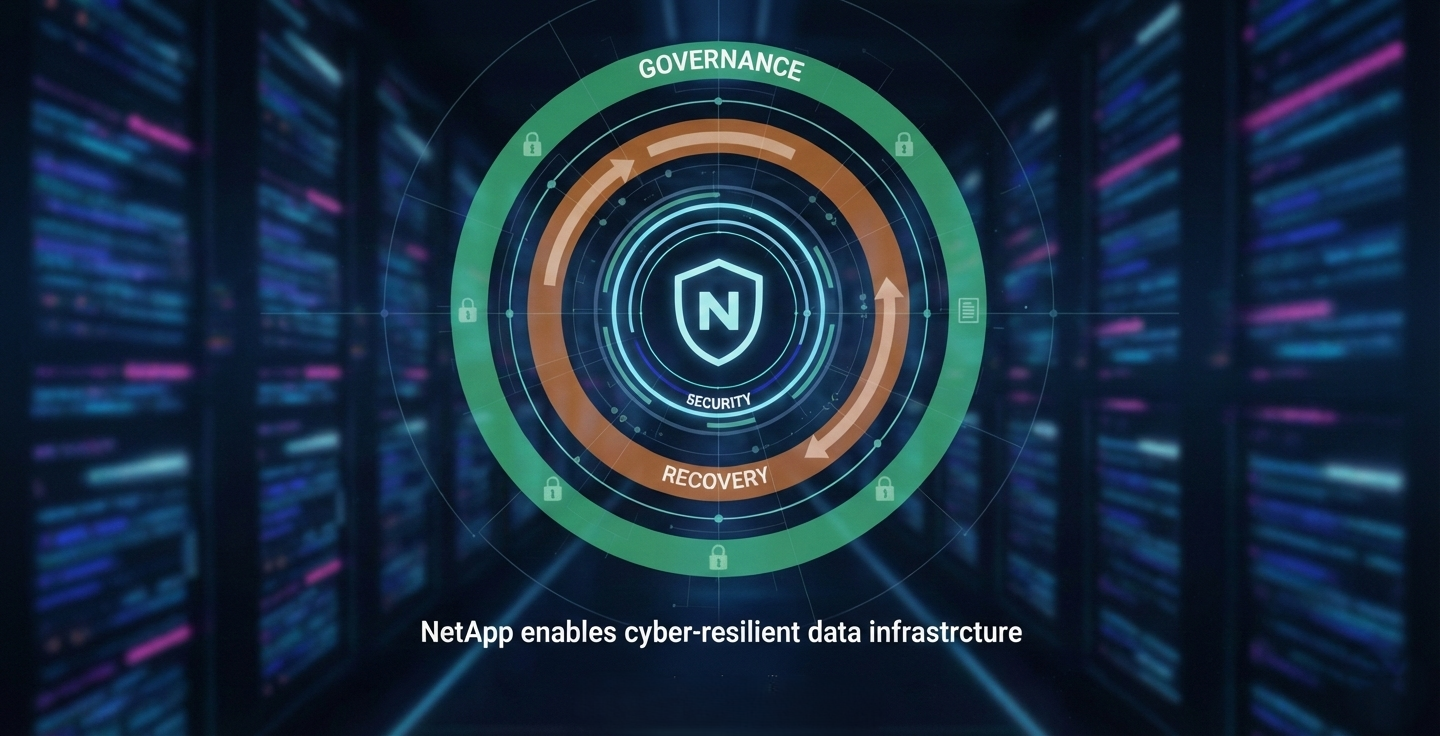
Cyber-resilient data has become a critical priority for enterprises as artificial intelligence and cloud systems increasingly drive business operations. In 2026, organizations are no longer asking whether to use digital platforms, they are asking how to protect data, recover from attacks, and maintain operational continuity.
Cyber threats have become one of the most serious risks facing enterprises today. As organizations continue to modernize their IT environments and adopt cloud-based systems, the volume and complexity of enterprise data have grown exponentially. In this environment, traditional security approaches are no longer sufficient. Enterprises must now focus on building cyber-resilient data strategies that ensure business continuity, even in the face of sophisticated attacks.
This is where NetApp plays a critical role. By focusing on intelligent data infrastructure and built-in security capabilities, NetApp is helping global enterprises protect, recover, and govern their data across hybrid and multi-cloud environments.
The Rising Importance of Cyber-Resilient Data
Cyber resilience goes beyond basic cybersecurity. While cybersecurity focuses on preventing attacks, cyber resilience focuses on how quickly and effectively an organization can recover when attacks occur.
In 2026, enterprises face:
- Increasing ransomware incidents
- Insider threats and data leaks
- Supply chain vulnerabilities
- Regulatory pressures around data protection
Data has become the primary target. As a result, organizations must treat data protection as a core business strategy, not just an IT function.
What Cyber-Resilient Data Means for Enterprises
A cyber-resilient data strategy ensures that organizations can operate even when systems are compromised. It ensures that critical business data remains accessible, secure, recoverable, and compliant.
This requires a combination of:
- Advanced backup and recovery
- Real-time monitoring
- Immutable storage
- Strong governance frameworks
NetApp’s approach focuses on embedding these capabilities directly into enterprise data infrastructure.
NetApp’s Role in Cyber-Resilient Data Infrastructure
NetApp enables cyber resilience by integrating security, governance, and recovery into a unified data platform. Instead of managing fragmented tools, enterprises gain centralized visibility and control over their data assets.
Key focus areas include:
Ransomware Protection and Recovery
NetApp supports proactive threat detection and rapid recovery mechanisms that minimize downtime and data loss. By enabling immutable backups and automated recovery workflows, enterprises can restore operations without paying ransoms or risking permanent data damage.
Data Governance and Compliance
With growing global regulations, enterprises must ensure that data is stored, accessed, and processed in compliance with applicable standards. NetApp supports data classification, policy enforcement, and audit-ready reporting to help organizations maintain regulatory readiness.
Hybrid and Multi-Cloud Security
Modern enterprises operate across on-premise systems, private clouds, and public cloud platforms. NetApp provides consistent security policies and data protection across all environments, reducing the risk created by infrastructure fragmentation.
Why Cyber-Resilient Data Is Now a Boardroom Priority
Cyber resilience is no longer just an IT concern. It has become a board-level issue because data disruptions directly impact:
- Revenue streams
- Customer trust
- Brand reputation
- Legal liability
Executives now evaluate data strategies based on their ability to withstand attacks, not just their performance or scalability.
NetApp’s focus on resilient data infrastructure aligns with this shift by enabling enterprises to build long-term digital trust.
The Shift from Prevention to Recovery
For years, organizations focused primarily on preventing cyberattacks. However, modern threats are increasingly sophisticated and unpredictable. No system is completely immune.
As a result, the strategic mindset has shifted from “Can we prevent attacks?” to “How fast can we recover?”
NetApp supports this transition by prioritizing recoverability, visibility, and automation within data systems.
Operational Benefits of Cyber-Resilient Data
Beyond security, cyber resilience also improves operational efficiency.
Enterprises benefit from:
- Reduced downtime during incidents
- Faster disaster recovery
- Lower financial losses
- Improved compliance management
- Stronger customer confidence
Instead of reacting to crises, organizations can operate continuously, even under adverse conditions.
Common Mistakes in Enterprise Data Security
Many enterprises still struggle with cyber resilience due to:
- Over-reliance on perimeter security
- Siloed data protection tools
- Manual recovery processes
- Lack of real-time monitoring
- Poor data governance
These gaps increase recovery times and expose organizations to unnecessary risk.
NetApp addresses these challenges by consolidating data protection, governance, and recovery into a unified platform.
The Future of Cyber-Resilient Data Strategies
Looking ahead, cyber-resilient data will become a standard enterprise capability, similar to financial risk management or compliance.
Future trends include:
- AI-driven threat detection
- Automated recovery orchestration
- Continuous compliance monitoring
- Predictive risk analytics
NetApp’s focus on intelligent data infrastructure positions enterprises to adapt to these changes without major system overhauls.
Conclusion
In 2026, cyber resilience is no longer optional, it is foundational to enterprise success. As data becomes the backbone of digital operations, organizations must ensure that their systems can withstand disruption, recover rapidly, and maintain trust.
Enterprises that invest in cyber-resilient data gain stronger protection, faster recovery, and long-term digital confidence. NetApp is enabling this shift by helping organizations build secure, compliant, and resilient data ecosystems for the future.
