
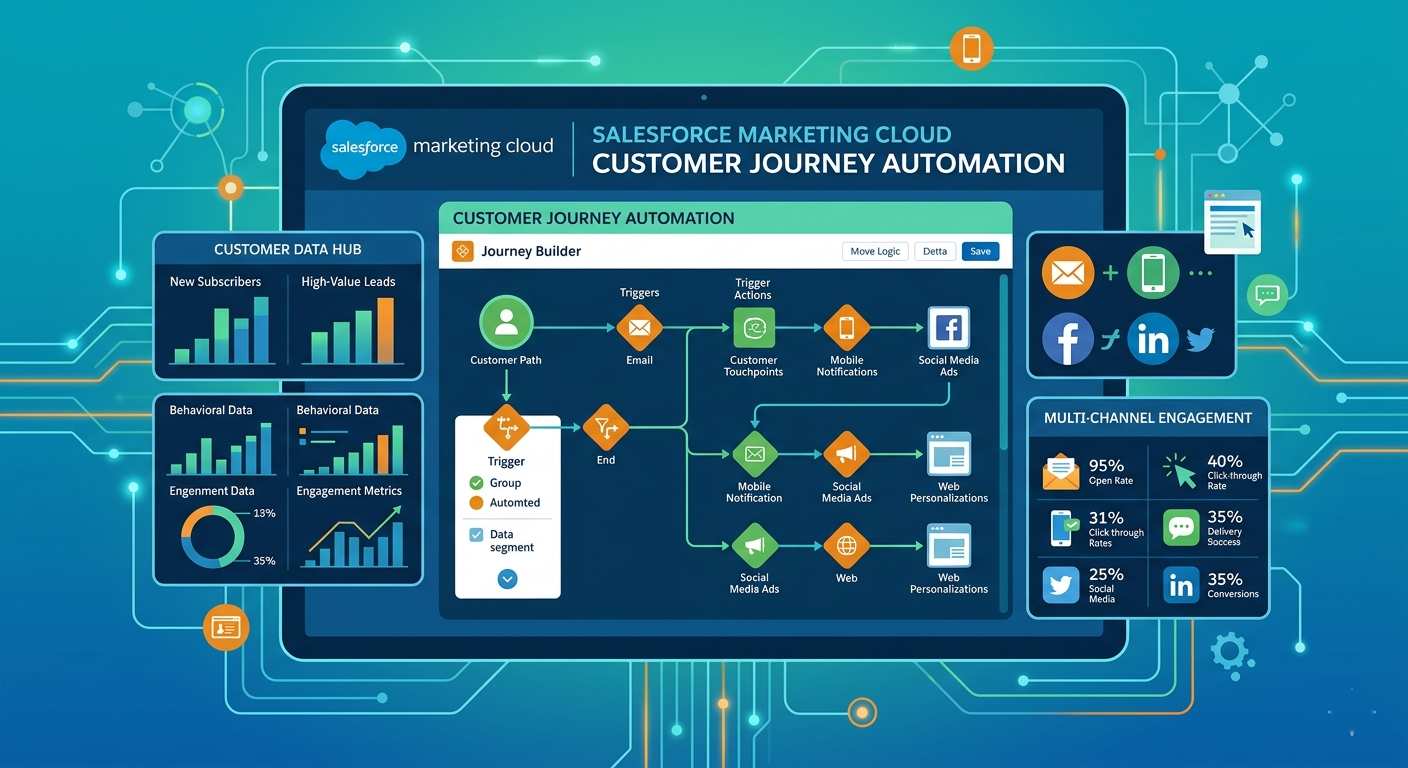
Modern customers expect more than generic marketing messages. They want personalized experiences, relevant communication, and seamless interactions across multiple channels. To meet these expectations, businesses are increasingly adopting advanced marketing technology platforms that unify customer data and automate engagement strategies. One of the most widely adopted solutions in this space is Salesforce Marketing Cloud. Designed to help organizations manage and optimize customer engagement, the platform enables marketers to create personalized experiences across email, mobile, web, and social channels.
As digital marketing becomes more data-driven, platforms like Salesforce Marketing Cloud are helping businesses transform how they connect with their audiences.
What Is Salesforce Marketing Cloud?
Salesforce Marketing Cloud is a digital marketing platform that allows businesses to manage customer journeys, automate campaigns, and analyze marketing performance from a single environment. It brings together customer data, artificial intelligence, and marketing automation tools to support personalized engagement strategies across channels.
Instead of running isolated campaigns, organizations can create unified customer journeys that adapt to real-time behavior and engagement. This approach helps companies move beyond traditional “one-size-fits-all” messaging and deliver relevant communication at every stage of the customer lifecycle.
Why Personalization Matters in Modern Marketing
Customer expectations have evolved dramatically over the past decade. Today’s consumers interact with brands across multiple digital touchpoints, including websites, email, mobile apps, and social media.
Personalization plays a critical role in improving these interactions. When businesses understand customer preferences, behaviors, and purchase history, they can deliver more relevant content and offers.
Marketing platforms like Salesforce Marketing Cloud enable this level of personalization by consolidating customer data from various sources and creating unified customer profiles. These profiles help marketers understand how customers engage with a brand and what type of communication resonates most with them.
Key Capabilities of Salesforce Marketing Cloud
Cross-Channel Marketing
Businesses can connect with customers across multiple channels, including email, SMS, mobile apps, web experiences, and advertising platforms. This ensures consistent communication regardless of where the customer interacts with the brand.
Customer Journey Automation
The platform enables marketers to design automated customer journeys based on behavior triggers. For example, when a customer signs up for a newsletter, they may automatically receive onboarding emails, product recommendations, and personalized offers.
AI-Driven Insights
Artificial intelligence plays a major role in optimizing marketing campaigns. AI can analyze engagement data, predict customer behavior, and recommend the best times or channels to communicate with customers.
Unified Customer Data
Modern marketing relies heavily on accurate and accessible data. Salesforce Marketing Cloud integrates with customer data platforms to create a single view of the customer, enabling more accurate segmentation and targeting.
Benefits for Enterprise Marketing Teams
Organizations that adopt Salesforce Marketing Cloud gain several strategic advantages.
Improved Customer Engagement
Personalized and timely communication increases customer engagement and strengthens brand relationships.
Scalable Marketing Operations
Automation tools allow businesses to scale marketing campaigns without increasing operational complexity.
Data-Driven Decision Making
Real-time analytics provide insights into campaign performance, helping marketers optimize strategies and improve return on investment.
Seamless Customer Experiences
By connecting multiple marketing channels, businesses can deliver consistent and cohesive experiences throughout the customer journey.
The Role of AI in Marketing Cloud
Artificial intelligence is becoming a central component of modern marketing platforms. In Salesforce Marketing Cloud, AI technologies analyze customer behavior patterns, automate campaign optimization, and recommend next-best actions.
For example, AI can determine the optimal time to send an email to maximize engagement or recommend products based on a customer’s browsing history. These insights help marketing teams make smarter decisions while improving campaign performance.
AI also reduces manual effort by automating repetitive tasks such as segmentation, targeting, and performance analysis.
The Future of Data-Driven Marketing
As digital ecosystems continue to expand, marketing strategies will increasingly rely on data integration, automation, and artificial intelligence. Platforms like Salesforce Marketing Cloud are playing a critical role in helping organizations navigate this transformation.
By combining customer data, AI insights, and automation capabilities, businesses can create more meaningful interactions with their audiences. This approach not only improves marketing effectiveness but also strengthens long-term customer relationships.
Conclusion
The shift toward personalized marketing is redefining how organizations engage with their customers. Businesses that leverage advanced platforms like Salesforce Marketing Cloud can deliver more relevant experiences, automate complex marketing workflows, and gain valuable insights into customer behavior.
As marketing technology continues to evolve, organizations that embrace data-driven platforms will be better positioned to build stronger customer relationships and remain competitive in the digital economy.
