
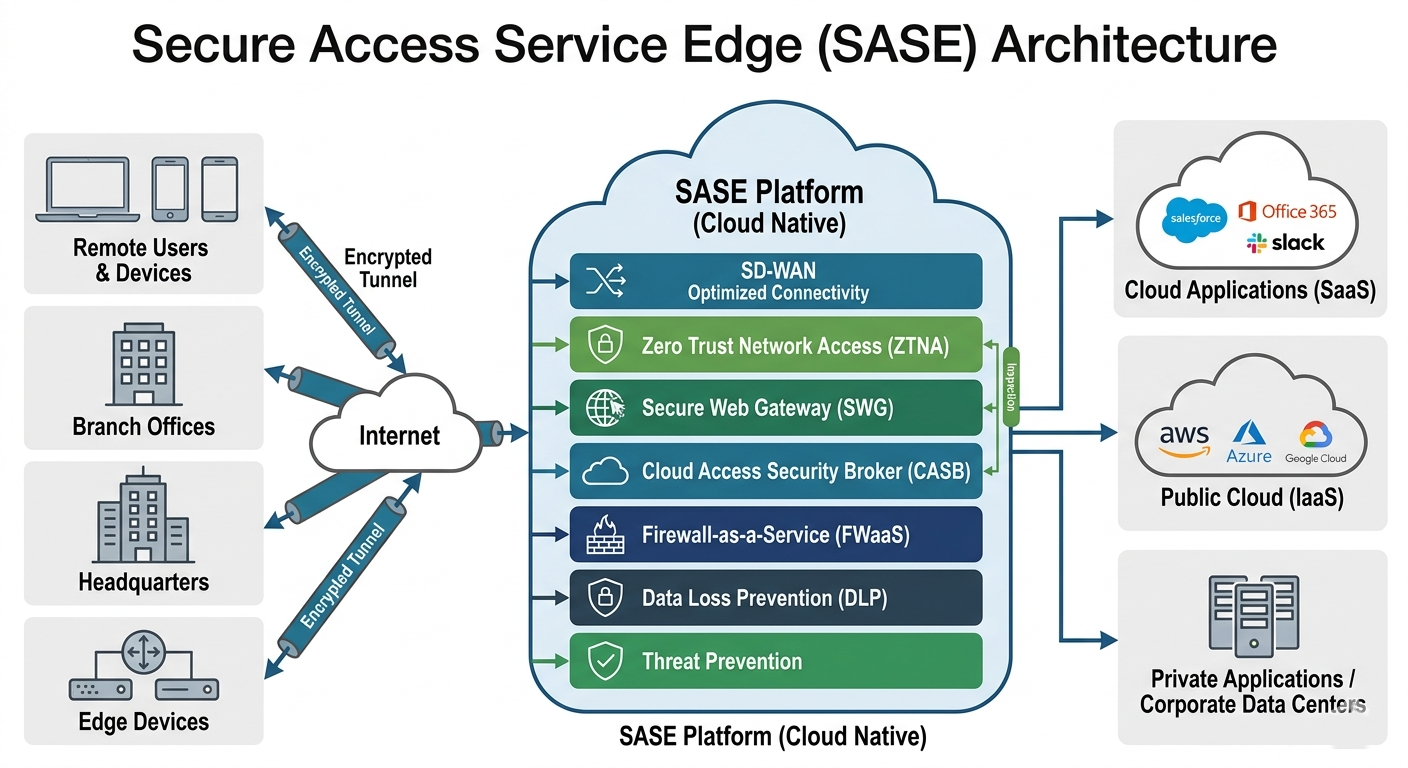
Enterprise IT environments have changed dramatically over the last decade. Organizations are no longer operating from centralized offices with on-premise infrastructure. Instead, businesses now rely on cloud platforms, remote workforces, and distributed applications. This shift has created new security challenges that traditional network architectures struggle to address. To overcome these challenges, many organizations are adopting Secure Access Service Edge (SASE), a modern security framework that integrates networking and security into a single cloud-delivered platform.
By combining advanced security capabilities with flexible network access, SASE is helping enterprises secure users, devices, and applications in an increasingly digital world.
What Is Secure Access Service Edge (SASE)?
Secure Access Service Edge, commonly known as SASE, is a cybersecurity architecture that merges networking and security services into a unified cloud-based solution. The concept was introduced by Gartner to describe the evolution of enterprise network security in cloud-first environments.
Traditional security models relied heavily on centralized data centers and perimeter-based protection. However, with employees accessing applications from multiple locations and devices, the network perimeter has effectively disappeared.
SASE addresses this challenge by delivering security services directly through the cloud, ensuring secure access to applications regardless of where users are located.
Why Traditional Network Security Models Are Struggling
Conventional security architectures were designed for a different era of IT infrastructure. As organizations migrate to cloud platforms and support remote work, these traditional models face several limitations.
Limited Scalability
Legacy network security systems often rely on physical appliances deployed in specific locations. Expanding these systems to support remote users or global operations can be costly and complex.
Increased Security Gaps
When employees access applications outside the corporate network, traditional security controls may not provide adequate protection.
Complex Infrastructure
Managing multiple security tools such as firewalls, VPNs, and web gateways can create operational complexity and increase administrative overhead.
These challenges have led many enterprises to explore modern frameworks like SASE.
Core Components of a SASE Architecture
A typical Secure Access Service Edge platform integrates several security and networking technologies into a single cloud-based solution.
Zero Trust Network Access (ZTNA)
ZTNA ensures that users and devices are continuously verified before accessing corporate applications. Instead of granting broad network access, users receive permission only for specific resources.
Secure Web Gateway (SWG)
Cloud Access Security Broker (CASB)
CASB solutions help organizations monitor and secure their use of cloud services by enforcing security policies and preventing data breaches.
Software-Defined Wide Area Network (SD-WAN)
SD-WAN optimizes network connectivity and improves application performance by dynamically routing traffic across different network paths.
Together, these technologies create a unified platform that provides both networking efficiency and strong security protection.
Benefits of SASE for Modern Enterprises
Adopting Secure Access Service Edge offers several advantages for organizations navigating digital transformation.
Enhanced Security
SASE applies consistent security policies across all users, devices, and applications, regardless of location.
Improved Performance
By delivering services through cloud infrastructure, SASE reduces latency and improves application performance for remote users.
Simplified IT Management
A unified SASE platform reduces the need for multiple standalone security tools, simplifying network management.
Better Support for Remote Work
With remote and hybrid work becoming the norm, SASE enables secure access to corporate resources from anywhere.
Challenges in Implementing SASE
Despite its advantages, adopting SASE requires careful planning.
Infrastructure Transformation
Organizations may need to transition from traditional network architectures to cloud-based solutions.
Integration with Existing Systems
Integrating SASE with legacy security tools and existing IT infrastructure can be complex.
Security Policy Management
Ensuring consistent policies across users, devices, and applications requires strong governance frameworks.
However, these challenges are manageable with the right strategy and technology partners.
The Future of Enterprise Security
As businesses continue to adopt cloud technologies and distributed work models, the demand for flexible and scalable security solutions will continue to grow.
Frameworks like Secure Access Service Edge represent a major shift toward cloud-native security architectures that prioritize user identity, device trust, and application access rather than traditional network boundaries.
Organizations that embrace SASE today will be better equipped to protect their digital environments while enabling innovation and growth.
Conclusion
Enterprise networks are becoming more distributed, making traditional security models increasingly ineffective. Secure Access Service Edge (SASE) provides a modern approach by combining networking and security into a unified cloud-delivered platform.
By adopting SASE, organizations can strengthen their cybersecurity posture, simplify network management, and support a flexible workforce. As digital transformation accelerates, SASE is likely to become a foundational component of enterprise security strategies.
