
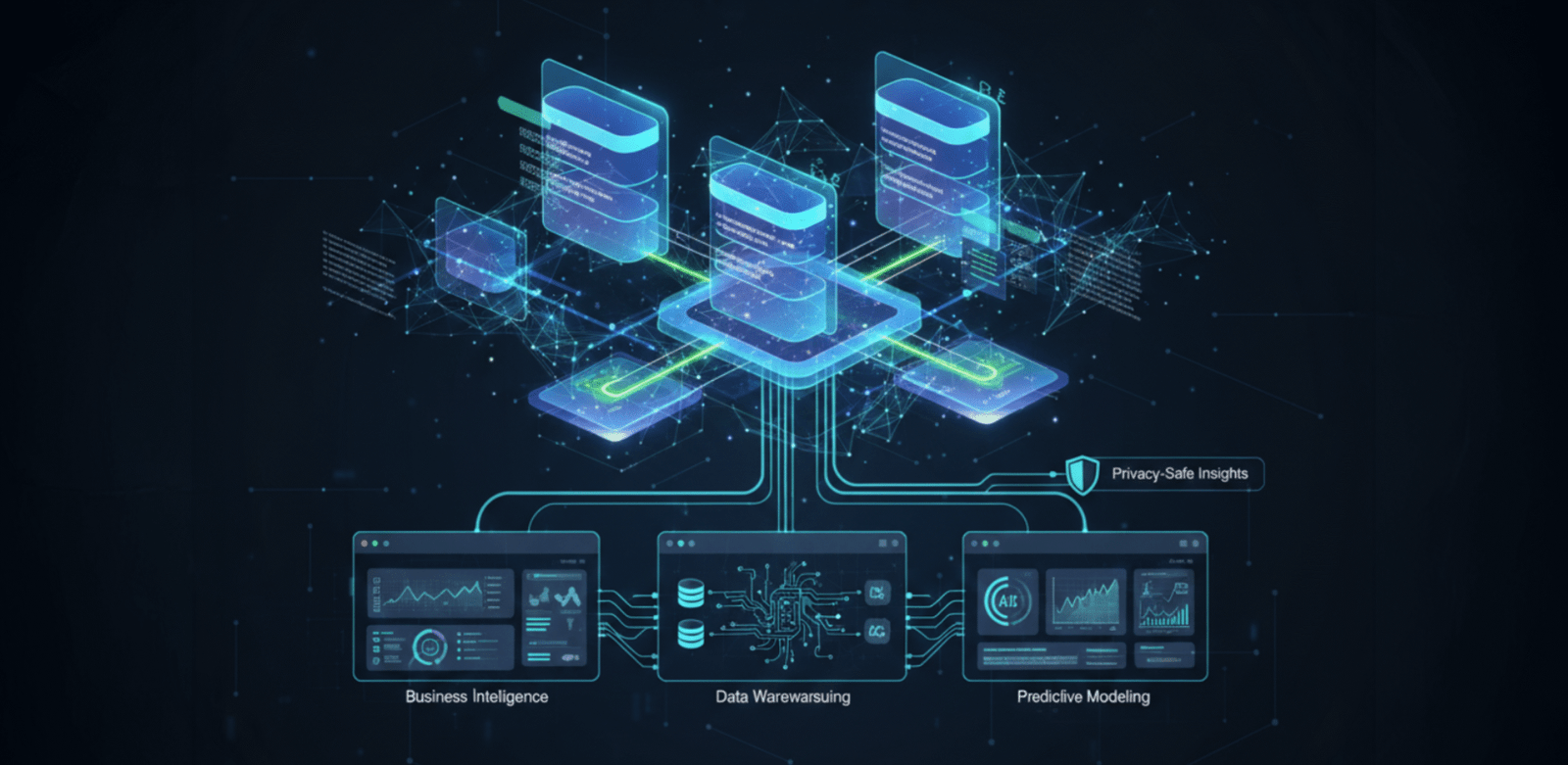
Synthetic data is emerging as a powerful foundation for modern business decision-making. As organizations operate across complex digital ecosystems, traditional data sources struggle to keep pace with real-time analytics, privacy requirements, and large-scale AI systems. In 2026, enterprises increasingly rely on artificial datasets to simulate scenarios, train intelligent systems, and generate insights without exposing sensitive information.
Unlike conventional business data, which is collected directly from customers and operational platforms, synthetic data is created through algorithms that replicate real-world patterns. This approach allows organizations to work with realistic information while avoiding the ethical and regulatory risks associated with personal data usage.
Why Traditional Business Data Is Losing Its Effectiveness
For decades, business intelligence depended on historical datasets. However, the modern digital environment produces massive volumes of information that often lack consistency, accuracy, and completeness. As a result, decision-making becomes slower and less reliable.
Privacy regulations further restrict data access. Frameworks such as GDPR, CCPA, and emerging AI governance standards limit how organizations can store and process personal information. Consequently, enterprises struggle to build advanced models using real user data alone.
Artificial data generation offers a practical solution. Organizations can design statistically accurate datasets that reflect real conditions without depending on sensitive records. This shift enables faster innovation while maintaining compliance.
How Artificial Data Is Created
Generated datasets are produced using advanced modeling techniques. These systems analyze existing patterns and create new data that behaves similarly under various conditions.
Common generation methods include:
- Statistical modeling for controlled environments
- Generative AI systems such as GANs and diffusion models
- Simulation engines used in finance and operations
- Rule-based frameworks for structured business workflows
Each method serves a different purpose. While generative models support complex behavioral data, simulation systems are ideal for forecasting and risk analysis.
Transforming Enterprise Decision-Making
Artificial datasets now play a strategic role in how organizations make decisions. Instead of reacting to historical trends, companies proactively simulate future outcomes.
In financial services, organizations test market risk using simulated economic conditions. This approach enables better stress testing without waiting for real-world crises.
In marketing and customer experience, teams analyze artificial customer journeys to refine campaigns and optimize personalization. Since no real identities are involved, privacy risks are eliminated.
Similarly, workforce analytics benefits from simulated employee data. HR teams can experiment with workforce planning, retention strategies, and compensation models safely and ethically.
Supporting Ethical AI and Compliance
As AI systems become more autonomous, governance becomes a priority. Artificial datasets help organizations build responsible AI models by removing direct exposure to personal data.
Key advantages include:
- Privacy protection through non-identifiable data
- Bias control by adjusting dataset structures
- Regulatory transparency through auditable systems
These benefits allow organizations to deploy AI systems confidently while maintaining trust.
Scenario Planning and Forecasting
Modern enterprises must prepare for uncertainty. Simulated data enables organizations to model thousands of potential futures before making strategic investments.
Examples include:
- Market volatility simulations
- Supply chain disruptions
- Customer behavior shifts
- Technology adoption scenarios
Through advanced modeling, leaders gain deeper insight into potential risks and opportunities.
Limitations and Governance Challenges
Despite its advantages, artificial data is not without limitations. Poorly generated datasets can introduce unrealistic patterns and distort results.
Additionally, over-reliance on simulated information can reduce awareness of real-world dynamics. Therefore, artificial datasets should complement, not replace, real operational data.
Strong governance frameworks remain essential to ensure accuracy, accountability, and ethical use.
The Future of Synthetic Data
In 2026, synthetic data is becoming an essential layer of enterprise intelligence. Organizations are shifting from passive data collection to active data generation.
In the coming years, artificial datasets will integrate into:
- Enterprise analytics platforms
- AI orchestration systems
- Digital twin environments
- Strategic forecasting engines
This evolution allows organizations to design future outcomes instead of merely analyzing past events.
Conclusion
Synthetic data represents a fundamental change in how organizations approach knowledge. By enabling privacy-safe analytics, advanced forecasting, and responsible AI development, artificial datasets empower enterprises to make better decisions in uncertain environments.
As digital complexity continues to grow, organizations that embrace data generation responsibly will gain a long-term strategic advantage.
