
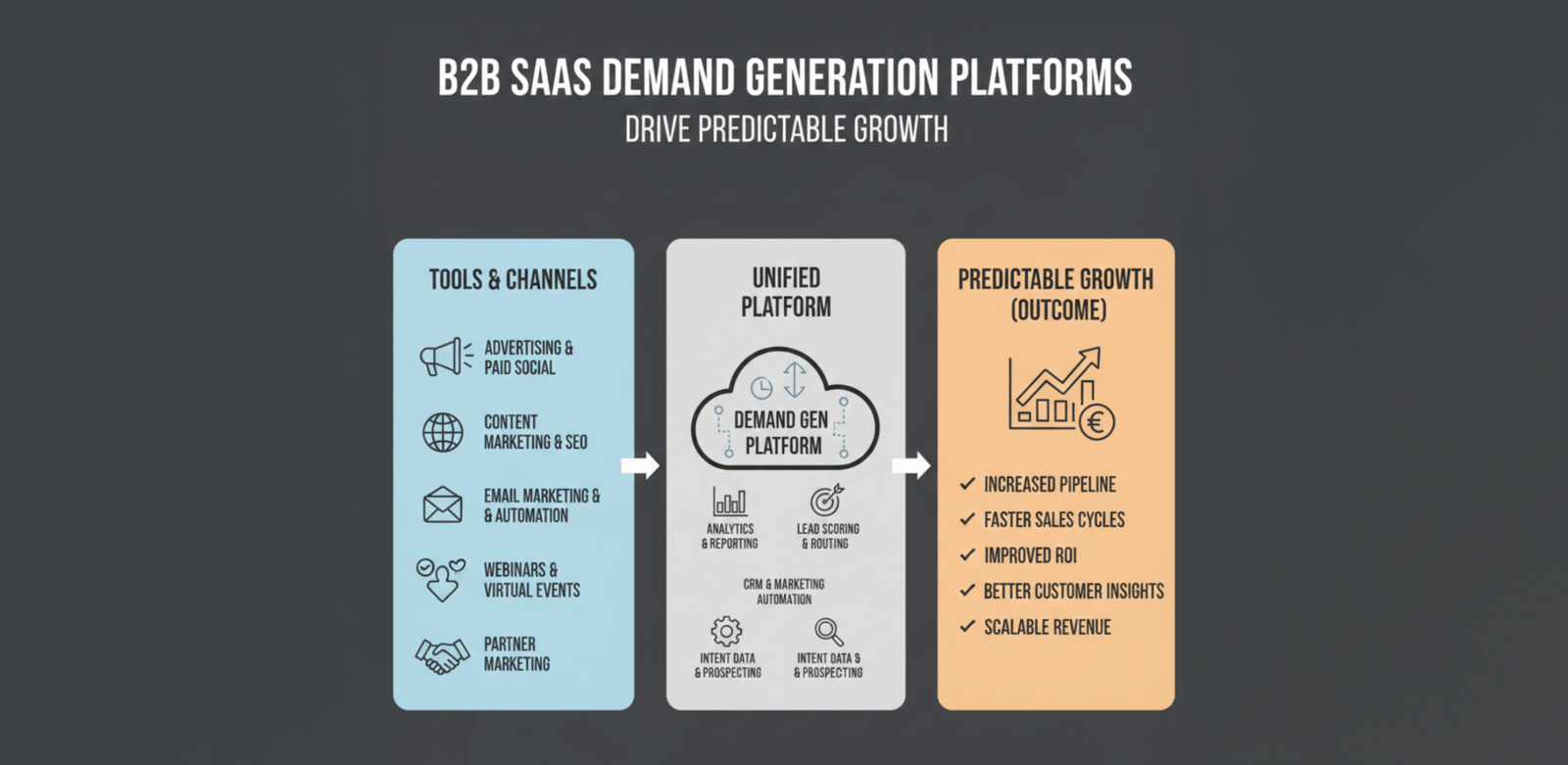
Demand generation tools for B2B SaaS are no longer optional in 2026. With longer sales cycles, informed buyers, and intense competition, SaaS companies must rely on intelligent platforms to attract, engage, and convert high-quality leads.
Instead of chasing volume, modern SaaS teams focus on building predictable pipelines using data-driven demand generation strategies. These tools don’t just automate campaigns, they empower teams to identify, engage, and convert prospects with precision. But with a crowded market of platforms, choosing the right tools can be overwhelming.
Why Demand Generation Tools for B2B SaaS Matter in 2026
B2B SaaS products are often complex, subscription-based, and require long sales cycles. Generating demand isn’t just about lead volume, it’s about quality engagement and nurturing relationships.
The right demand generation tools help companies:
- Identify high-value prospects through predictive analytics
- Personalize outreach across multiple channels
- Automate repetitive tasks to free up sales and marketing teams
- Measure ROI and optimize campaigns in real-time
Companies that leverage these tools see higher pipeline efficiency, reduced CAC, and stronger alignment between marketing and sales teams.
1. Marketing Automation Tools for B2B SaaS Demand Generation
Marketing automation remains the backbone of demand generation. Platforms like HubSpot, Marketo, and Pardot enable SaaS teams to automate emails, track website engagement, and score leads based on activity.
Why they matter in 2026:
- Advanced AI-driven segmentation
- Real-time personalization at scale
- Seamless CRM integration for pipeline visibility
Marketing automation platforms allow teams to focus on strategy and creativity while the system handles repetitive workflows.
2. Account-Based Demand Generation Tools
ABM is no longer optional for B2B SaaS. Tools like Demandbase, 6sense, and Terminus help teams target high-value accounts rather than casting a wide net.
Key benefits:
- Identify and prioritize key accounts
- Deliver personalized campaigns to stakeholders
- Align marketing and sales for coordinated outreach
ABM ensures every marketing dollar is spent on accounts most likely to convert, maximizing ROI in competitive SaaS markets.
3. AI-Powered Demand Generation Tools
Artificial intelligence is transforming demand generation. Tools like Conversica, Drift, and Exceed.ai provide automated lead engagement and conversational AI to qualify prospects faster.
Benefits include:
- Instant follow-up with inbound leads
- Natural language interactions that feel human
- Predictive insights into which prospects are sales-ready
AI ensures that leads never go cold and sales teams spend time only on the most promising opportunities.
4. Content Experience & Personalization Platforms
Content is central to SaaS demand generation. Platforms such as Uberflip, PathFactory, and Ion allow marketers to personalize content journeys for each prospect.
Why content personalization is critical:
- Keeps prospects engaged longer
- Educates leads about complex SaaS solutions
- Improves lead-to-opportunity conversion
By delivering relevant, targeted content, these tools help SaaS companies nurture relationships at every stage of the funnel.
5. Multi-Channel Orchestration Tools
Modern B2B buyers interact across email, social media, chat, webinars, and more. Tools like SalesLoft, Outreach, and Klaviyo help teams coordinate campaigns across channels.
Key benefits:
- Consistent messaging across platforms
- Automated multi-touch campaigns
- Advanced analytics to measure channel effectiveness
Orchestrating multiple channels ensures prospects receive timely, relevant communication without manual effort.
6. Analytics & Attribution Platforms
Finally, SaaS teams need tools to measure success and optimize campaigns. Platforms such as Looker, Tableau, and Google Analytics 4 provide deep insights into lead behavior, campaign performance, and revenue attribution.
Why analytics matters:
- Understand which campaigns drive revenue
- Optimize spend across channels
- Identify bottlenecks in the funnel
Without data-driven insights, even the most sophisticated demand generation strategies can fail.
How to Build the Right Demand Generation Tech Stack
The key to successful demand generation in 2026 isn’t just adopting tools, it’s building a cohesive, integrated tech stack. SaaS companies should:
- Identify core objectives (lead quality, pipeline acceleration, engagement)
- Map tools to specific workflows
- Ensure seamless CRM and data integration
- Continuously review performance and optimize
An effective stack not only generates demand but also provides actionable insights to refine strategy over time.
Conclusion
Demand generation tools for B2B SaaS define competitive advantage in 2026. Companies that invest in automation, AI, personalization, and analytics will generate higher-quality leads and close deals faster.
By carefully selecting and integrating these tools, SaaS companies can drive higher-quality leads, faster pipeline velocity, and measurable ROI. The future of demand generation is intelligent, personalized, and fully data-driven. Those who adapt now will lead the SaaS landscape for years to come.

Im no longer certain the place you’re getting your information, but good topic. I needs to spend some time finding out more or figuring out more. Thanks for magnificent info I was on the lookout for this info for my mission.