
Introduction
Businesses have a changing face in modern times with developments in managing employees, pay, attendance, and compliance. Outdated processes and use of spreadsheets for HR have become untenable. Organising and implementing proper management for a growing workforce without a reliable system in place has become impossible. As a result, companies have begun using HRMS technology as a solution for management in the cloud.
HRMS, cloud-based systems, are designed for the automation of HR processes, capturing and centralising workforce data, and improving cross-organisational transparency. Attendance organisation, payroll processing, and HR systems management from employee onboarding and evaluation have been made simpler with the use of HRMS applications.
With the ongoing digital transformation, HRMS in the cloud is a necessity for any organisation that wants to improve business operations.
What's a Cloud HRMS?
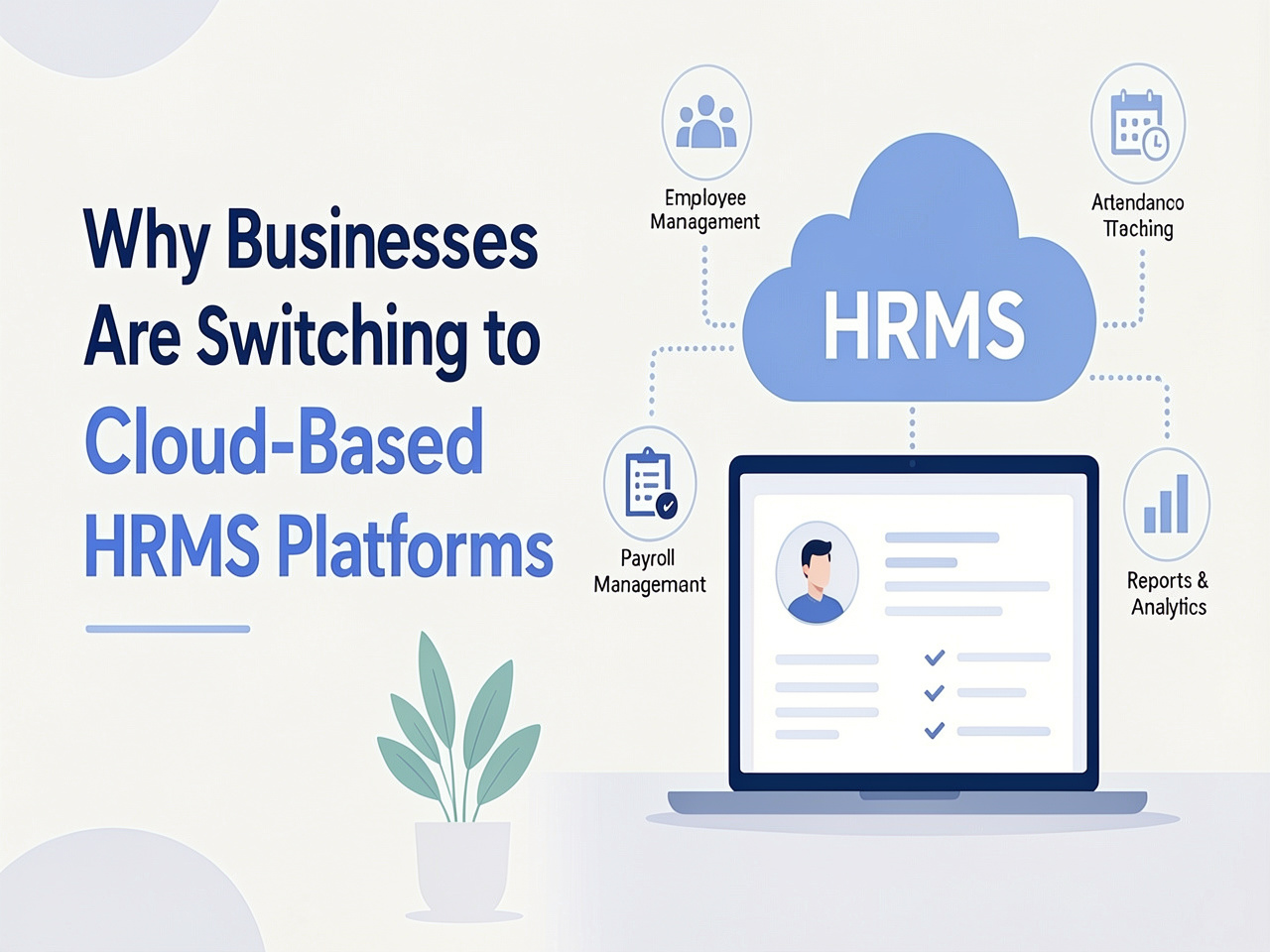
A Cloud HRMS platform is a software option that helps manage various HR functions within a single system over a cloud network and can be accessed from anywhere.
What is most distinct from traditional software systems is that a cloud HRMS stores HR data over the internet as opposed to a physical server, making HR data accessible virtually from anywhere.
Here are the typical features that can be found in a Cloud HRMS:
· Maintain an employee database
· Automatic payroll
· Track attendance/employee leave
· Recruit and onboard employees
· Manage performance
· Self-service portals
· Monitor legal HR compliance
Additionally, other features are aimed at streamlining HR processes and improving the overall productivity of an organisation.
Reasons Firms Are Committing to Cloud-based HRMS Platforms
1. Ability to Access Information from Anywhere
Cloud-based HRMS programmes are accessible from any spot across the world. HR workers and employees can view information at any time and from any location.
Some of the main beneficiaries of such systems include:
Remote teams
Organizations with employees at multiple sites Cloud-based systems allow companies to handle their core HR functions independent of physical workplace infrastructures.
2. Automation of Functions
HR functions can be extremely tedious, as they include a lot of manual inputs. Cloud-based HRMS programmes are able to perform the functions of:
· Payroll
· Attendance tracking
· Leave approvals
· Employee onboarding
Once the functions are automated, human resource employees can carry out other critical functions related to the business.
3. Enhanced Payroll and Compliance Management
Managing payroll by hand leaves far too much room for error and potential issues with compliance. The complexities of payroll management are drastically eased with cloud HRMS systems by including automatic payroll management with automatic calculations of the elements, including salary, payroll deductions, payroll tax and bonuses.
· Employers can also manage/pay:
· Tax compliance
· Employee records
· Statutory filings
· Attendance-based payroll
Cloud systems can help organizations maintain compliance on evolving regulations
4. Improved Employee experience
Transparency and accessibility of HR services are the words of the new employees. Cloud HRMS solutions provide portals through which employees can
· Request Leave
· Change and update
· Attendance Tracking
· Download Weekly Pay
Provide portals through which employees can access HRMS services.
5. Affordable for Expanding Enterprises
Typical HR software demands a lot of costly physical and virtual infrastructure. Working in the cloud, an HRMS is based on a subscription model and therefore requires less initial expenditure.
Companies save on:
· Purchase and installation of hardware
· Ongoing maintenance of the system
· Technical support
· Continual software enhancements
As a result, cloud HRMS service providers are an excellent fit for small startups and developing companies.
Cloud-Based HRMS Applications
Cloud-based HRMS makes it easier for businesses to adopt new HRMS technologies for better workforce management. Some well-known cloud-based HRMS applications include:
· BambooHR
· Workday
· UKG Pro
Through the use of these applications, organisations can increase operational efficiency, automate manual tasks, and implement better employee management.
The Role of Cloud HRMS Software in Productivity Enhancement
The cloud HRMS system is capable of far more than just storing employee-related information on the cloud. It increases business productivity by:
· Eliminating employee-related activities from HR responsibilities.
· Streamlining your business operations
· Removing process complications
· Improving organizational engagement
· Offering analysis and reporting in real-time
Advanced HRMS applications can significantly enhance the quality of business decisions by leveraging data.
Security and Data Protection
Almost every business that collects, stores, and processes data on its employees has to face the challenge that comes with securing that sensitive information. Luckily, with modern cloud HRMS systems, businesses can have peace of mind with:
· Cloud-based storage
· Data encryption
· Control of access to the system
· Scheduled data backups
With these protection measures, businesses can keep their sensitive employee and payroll information safe and secure.
Conclusion
With their flexibility, automation, and scalability, as well as improved employee management, businesses now consider cloud-based HRMS platforms as a step forward. The software covers a variety of functions in an organisation, from payroll processing, attendance, and compliance management through to analytics of the workforce. With the cloud, HR systems become simpler and immeasurably efficient.