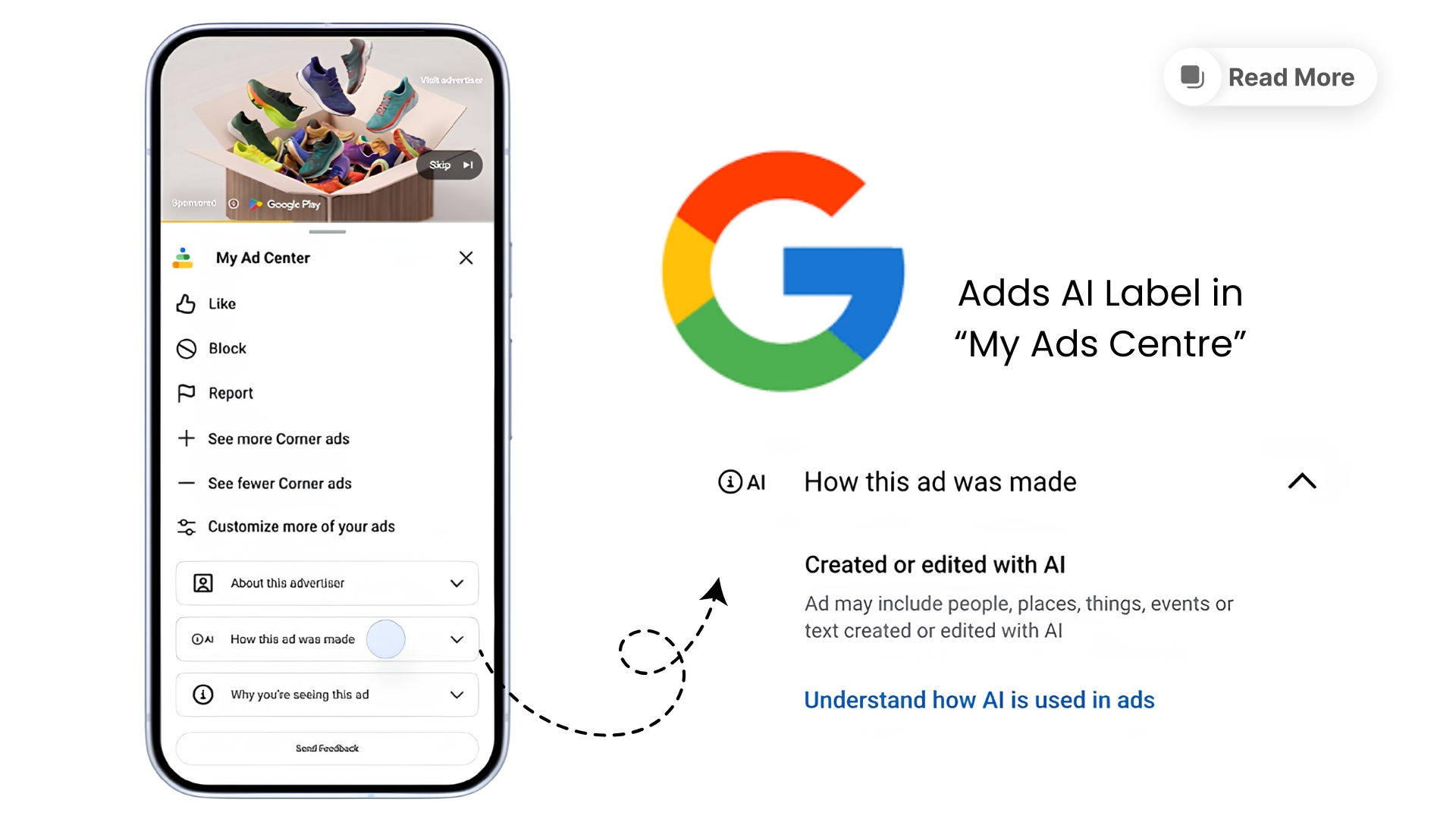
The landscape of digital marketing is undergoing a fundamental transformation that will redefine how brands communicate with consumers. Advertisers leveraging generative artificial intelligence to produce creatives will soon face a strict new reality. Google has officially announced the implementation of mandatory Google AI ad labels, a sweeping policy designed to disclose when promotional content is synthetically generated or significantly altered. This shift marks a critical juncture for the advertising technology sector, signaling the end of unchecked, invisible AI generation in commercial media.
The mechanics of this new directive are comprehensive and aggressively structured. The search and advertising giant will require clear, unavoidable disclosures on image, audio, and video advertisements that contain synthetic elements. This is not a minor algorithmic adjustment; it is a foundational policy update that will impact billions of daily impressions across the internet. The new framework aims to prevent deceptive practices and protect consumer trust, particularly as enterprise tools from companies like OpenAI, Microsoft, and Adobe make it increasingly difficult for the average user to distinguish human-made content from machine-generated media. Advertisers who fail to comply with these new disclosure guidelines risk immediate ad disapproval, account suspension, and significant disruptions to their revenue pipelines.
This development sends immediate shockwaves through the $600 billion global digital advertising market. Over the past 18 months, marketing agencies and in-house enterprise teams have seen creative production costs plummet by as much as 50% due to the rapid adoption of generative AI. However, this unprecedented operational efficiency now comes with a severe visibility caveat. Brands must urgently re-evaluate their reliance on synthetic creatives for front-facing campaigns. The primary concern among chief marketing officers is consumer psychology. Will a potential buyer trust an enterprise software commercial or a retail product image if it is explicitly labeled as AI-generated? Conversion rates, which currently hover around 2.5% to 3% for standard display network ads, are expected to experience high volatility as audiences adjust to these new transparency markers.
Strategic analysis of this move reveals a broader industry correction. The race in the MarTeq space is no longer about which company can generate the most synthetic content at the lowest cost; it is about who can maintain authentic consumer relationships. By commoditizing basic AI generation and forcing transparency, Google is placing a premium on high-fidelity, human-centric brand storytelling. Organizations that attempt to bypass these detection systems using sophisticated deepfake technologies will face severe reputational damage. The true market winners in this new ecosystem will be the companies that pivot their AI investments toward backend infrastructure. Utilizing artificial intelligence for predictive analytics, programmatic bidding, and hyper-personalization powered by platforms like Salesforce and HubSpot will yield far higher returns than relying on artificial imagery.
Looking ahead, this transparency mandate will inevitably trigger a domino effect across the broader technology ecosystem. Where Google leads in advertising policy, massive competitors like Meta, Amazon, and Apple are practically forced to follow to maintain parity in user trust and regulatory compliance. The next 12 to 24 months will likely see the establishment of a standardized, industry-wide consortium for AI watermarking and credentialing. Furthermore, this self-regulation is a preemptive strike against looming governmental oversight. With agencies like the Federal Trade Commission in the United States and regulators enforcing the European Union AI Act watching closely, Big Tech is attempting to prove it can govern its own synthetic media landscape.
The implementation of Google AI ad labels should not be viewed by marketers as a punitive restriction, but rather as a necessary market maturation. It forces the digital advertising ecosystem to elevate its standards. Companies that adapt rapidly to this transparency-first environment will secure a distinct competitive advantage, building deeper brand loyalty while their slower competitors struggle with compliance penalties and declining consumer trust.