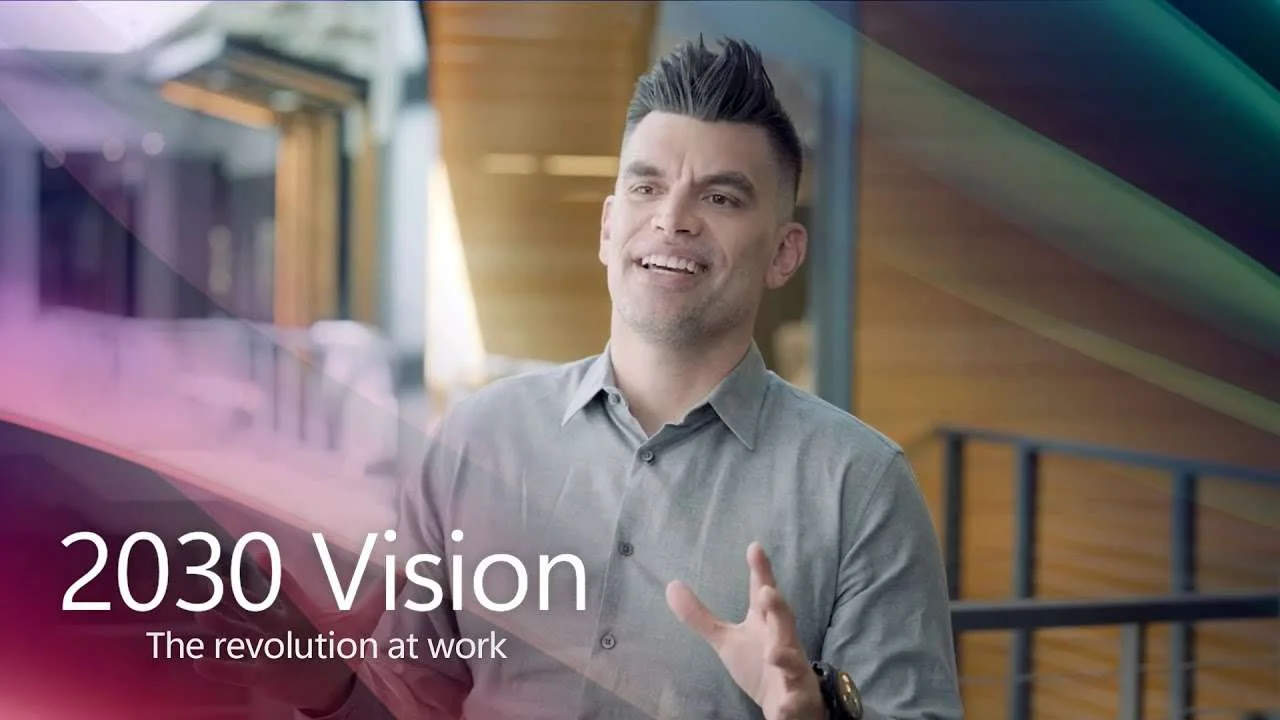

Microsoft is rewriting the future of personal computing with its newly teased ‘Windows 2030 Vision’—a bold roadmap signaling a transformative shift toward AI-powered user interfaces. This vision reflects Microsoft’s ambition to evolve Windows into a fully intelligent, context-aware platform that responds naturally to human intent.
From Operating System to Cognitive Companion
Windows 2030 won’t just be an OS; it will act more like a digital assistant. At its core lies a sophisticated AI engine designed to understand user behavior, anticipate needs, and deliver seamless interactions across devices and environments.
Microsoft aims to make AI the foundation of Windows—embedding it deep within the user experience to enable voice-first commands, real-time decision support, automated workflows, and predictive personalization.
Goodbye Clicks, Hello Conversations
One of the biggest changes hinted at is the reduction in traditional input methods. Instead of relying on clicks and menus, users may interact with Windows via natural language prompts, voice commands, or even gestures. AI will help translate complex tasks—like searching, formatting, or scheduling—into a few spoken or typed words.
This aligns with Microsoft’s broader push across its ecosystem to make Copilot, its generative AI assistant, a central feature in productivity apps, Azure services, and now, potentially, Windows itself.
Security and Performance: AI at the Core
The 2030 roadmap also outlines enhancements in AI-powered cybersecurity, proactive device optimization, and adaptive resource management. By analyzing user habits and system usage, Windows will be able to auto-adjust settings, detect threats faster, and optimize performance dynamically.
These upgrades could significantly benefit enterprise users, IT admins, and developers who seek intelligent infrastructure with minimal manual intervention.
Future-Ready Experiences
The Windows 2030 vision aligns closely with trends in edge computing, spatial computing, and cloud integration. Microsoft is investing heavily in building a system that isn’t just confined to a desktop but spans across virtual environments, mobile devices, and possibly even wearables or AR platforms.
The move is part of a larger shift in the tech industry—where AI-first operating systems could redefine how humans and machines interact.
Conclusion
Microsoft’s Windows 2030 Vision is more than a futuristic pitch—it’s a clear signal that AI is becoming the new user interface. By embedding intelligence at the core of the operating system, Microsoft is preparing for a future where technology becomes more intuitive, adaptive, and personal than ever before.