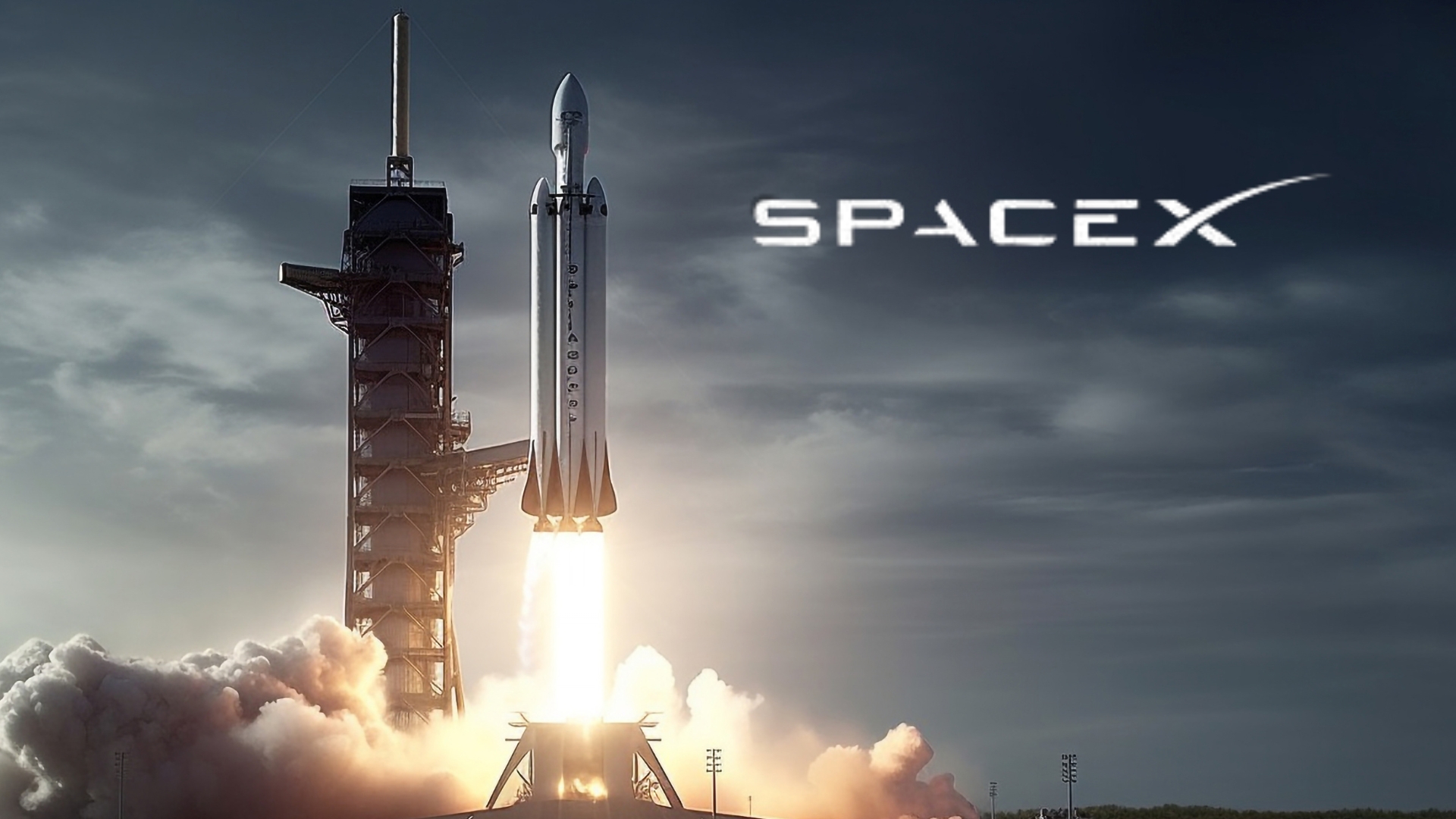

SpaceX Just Pulled Off the Biggest IPO in History: And the World Is Watching
For 24 years, SpaceX stayed private. Through rocket explosions, Mars dreams, billions raised from venture capitalists, and the transformation of the entire space industry Elon Musk kept his most ambitious company off the public markets.
That changed today.
On June 12, 2026, Space Exploration Technologies Corp. officially began trading on the Nasdaq under the ticker SPCX, marking the largest initial public offering in the history of global financial markets. The company raised $75 billion more than double Saudi Aramco's 2019 record at a fixed share price of $135, valuing the company at roughly $1.77 trillion on day one.
To put that in perspective: SpaceX's debut valuation exceeds Tesla's current market cap, making it one of the top seven most valuable US companies from the moment it opened for trading.
This is not just a financial milestone. It is a signal about where the world's capital is flowing, which industries investors believe in for the next decade, and what it means for the global technology landscape when the company behind the world's most advanced rockets, the world's fastest-growing satellite internet network, and an American chip fab all go public at the same time.
The Numbers: What SpaceX's IPO Actually Looks Like
Let's start with the hard data, because the numbers here are genuinely historic.
SpaceX officially began trading on June 12, 2026 on the Nasdaq under the ticker symbol SPCX, priced at a fixed $135 per share. The company offered 555.6 million Class A shares, raising a total of $75 billion and achieving a company valuation of approximately $1.77 trillion. Investor demand was extraordinary, the offering was oversubscribed more than four times, with total demand exceeding $250 billion against the $75 billion raise. In a move that set this IPO apart from nearly every mega-offering before it, SpaceX reserved up to 30% of shares for retail investors far above the industry norm of 5–10%. The underwriters also hold a greenshoe option on an additional 83.3 million shares, worth roughly $11 billion more if exercised.
The deal eclipses every previous IPO record not by a marginal amount, but by a factor of three. Saudi Aramco's 2019 debut, which raised $24.9 billion at a $320 billion valuation, had stood as the all-time record for nearly seven years. SpaceX surpassed it by raising three times as much at more than five times the valuation.
SpaceX also took an unusual approach to pricing. Rather than following the traditional IPO process of building a book and setting a price at the last moment, the company tested its $135 target with investors before the official roadshow started and found the market willing. The offering attracted more than four times the available shares, according to Bloomberg, giving SpaceX the confidence to hold its price firm without the usual last-minute uncertainty.
A Hyperliquid crypto prediction market, which offers synthetic exposure to pre-IPO stocks, currently prices SPCX at $167 suggesting market participants expect a 20%+ first-day pop when active trading begins.
Why SpaceX Decided to Go Public Now
For years, Elon Musk resisted taking SpaceX public. His stated reasoning was straightforward: the company's long-term mission making humanity multi-planetary requires the kind of patient, decade-spanning investment that public markets struggle to support. Quarterly earnings pressure and the demands of public shareholders, Musk argued, would constrain the risk-taking that defines SpaceX's culture.
So what changed?
Three things converged to make 2026 the moment.
- Starlink reached escape velocity. With over 9 million subscribers and revenues of $15–16 billion in 2025, Starlink is no longer a moonshot it is a fast-growing, cash-generating business with a clear path to continued expansion. That gives SpaceX a revenue story that public market investors can underwrite with confidence.
- The capital markets environment is historically receptive. Tech IPO sentiment in 2026 is the strongest it has been since 2021, with AI companies Anthropic and OpenAI both preparing their own public debuts. SpaceX is going first and in doing so, is setting the valuation benchmark for the entire wave.
- The company needed the capital. SpaceX's to-do list is staggering Starship commercialization, a new American semiconductor fab, Starlink Gen 3 constellation deployment, and preparations for the Artemis lunar missions. The $75 billion raised provides the fuel. As SpaceX CFO Bret Johnsen confirmed in investor roadshow calls, the company has been planning this step since late 2025.
Starlink: The Revenue Engine Behind the $1.77 Trillion Valuation
No analysis of SpaceX's IPO is complete without understanding Starlink, because Starlink is the primary reason the valuation is where it is.
- 9 million+ active subscribers globally as of mid-2026
- $15–16 billion in 2025 revenue, primarily from Starlink subscriptions and enterprise contracts
- Fastest-growing satellite internet provider in history — with coverage now spanning 100+ countries
- Google recently signed a $920 million per month compute agreement with SpaceX, signaling the scale of enterprise demand for Starlink's infrastructure
At $135 per share and a $1.77 trillion valuation, SpaceX is trading at approximately 100x trailing revenue an extraordinary multiple that prices in years of continued hyper growth. As noted by analysts at Morningstar, fair value at more conservative assumptions sits closer to $780 billion less than half the IPO price. The premium reflects the market's belief in Starlink's long-term trajectory, not just its current financials.
For B2B leaders and investors, Starlink's enterprise and government contracts are the most relevant revenue line and they are growing faster than the consumer segment. Defense contracts via Starshield (the government variant of Starlink), maritime and aviation connectivity, and enterprise IoT represent a B2B revenue opportunity that most analysts believe is still in early innings.
Who Wins the Most From This IPO
The IPO's biggest beneficiaries read like a who's who of Silicon Valley's most successful long-term bets.
Elon Musk is the headline winner. He holds just under 850 million Class A shares entitled to 1 vote per share, plus 5.6 billion Class B shares with 10 votes per share each including 1 billion shares contingent on a Mars colony reaching 1 million residents. At the $135 IPO price, Musk's stake alone positions him to become the world's first trillionaire the milestone that multiple financial analysts and publications including The Hindu have flagged as a direct consequence of today's listing.
Antonio Gracias, founder and CEO of Valor Management and a SpaceX board member, holds 503.4 million shares a position valued at nearly $68 billion at the IPO price. That is one of the largest single shareholder windfalls in IPO history.
Gwynne Shotwell, SpaceX's COO and the executive widely credited with making the company operationally functional through two decades of development, holds nearly 12.6 million shares.
Luke Nosek, board member and early investor, holds 33 million shares.
Beyond individuals, the roughly 400 venture capital firms that backed SpaceX across its 24 years as a private company during which it raised approximately $40 billion in private capital will see significant returns. And a large number of smaller investors who entered via special purpose vehicles (SPVs) will also benefit, though some may not know the exact magnitude of their returns until after the company's staggered lock-up period expires.
The Retail Revolution: Why This IPO Is Different
One of the most strategically notable decisions in SpaceX's IPO structure is its approach to retail investors.
Typically, mega-IPOs reserve 5–10% of shares for retail buyers the rest goes to institutional investors and large funds. SpaceX broke from this convention by allocating up to 30% of shares for retail investors through platforms including Robinhood, Fidelity, Charles Schwab, SoFi, and E*TRADE.
This is not just a PR decision. It is a structural choice that broadens SpaceX's shareholder base, aligns the company with a generation of retail investors who grew up watching Falcon 9 landings on YouTube, and creates a community of individual stakeholders invested in SpaceX's long-term mission.
However, with the IPO more than four times oversubscribed, most retail requests will be only partially filled or not filled at all. The demand which reportedly exceeded $250 billion against a $75 billion raise means allocation will be scarce regardless of channel.
For those following the B2B investment implications, the retail-friendly structure also signals something broader: the democratization of access to transformative private companies. As digital platform investment and fintech infrastructure continue to reshape how capital flows, SpaceX's IPO structure may set a precedent for how future mega-IPOs approach public participation.
The Risks: What Could Go Wrong
No IPO at this scale comes without meaningful risk and SpaceX's prospectus is candid about several.
Valuation risk is real: At 100x trailing revenue, the market is pricing in sustained hyper growth for years. Morningstar's fair value estimate of ~$780 billion less than half the IPO price reflects a more conservative set of assumptions. If Starlink growth decelerates or competition intensifies, the multiple will compress.
Governance concentration: The dual-class share structure gives Elon Musk overwhelming voting control through his Class B shares (10 votes each). Senator Elizabeth Warren publicly asked the SEC to delay the offering over governance concerns though as noted by analysts, such letters have no legal authority to stop an IPO. For investors, this means that SpaceX's direction is essentially determined by one person, regardless of public shareholder preferences.
Starship execution risk: SpaceX's Starship program the massive reusable rocket designed for lunar missions, Mars, and high-volume orbital launches has faced multiple delays in 2026. Its 12th overall test flight has slipped three times this year, from a March target to May and now into the summer. Starship's successful commercialization is essential to justifying the long-term valuation thesis.
Government contract dependency: A significant portion of SpaceX's revenue comes from NASA, the US Department of Defense, and other government agencies. Changes in federal budget priorities or procurement policy could materially affect revenue.
Competitive pressure: Blue Origin, with its New Glenn rocket and Blue Moon lunar lander, is actively competing for NASA and commercial contracts. International competitors in launch services are also growing.
What This Means for B2B and Tech Leaders
SpaceX going public is not just a financial event. It is a signal with direct implications for B2B decision-makers across industries.
For enterprise technology buyers:Google's $920 million per month compute agreement with SpaceX announced just days before the IPO signals the scale of enterprise appetite for Starlink-based infrastructure. As AI data center power and connectivity demands grow, Starlink's global reach makes it a viable enterprise infrastructure option in ways it wasn't three years ago. Understanding SpaceX's roadmap is now a relevant input for enterprise infrastructure planning.
For investors and CFOs: The SpaceX IPO sets the valuation benchmark for the incoming wave of large tech IPOs. Anthropic and OpenAI are both preparing filings. The price SpaceX commands and how SPCX performs in its first 90 days will directly calibrate market expectations for what follows. As global investment patterns continue shifting toward AI and deep tech, SpaceX's public market debut is a defining data point.
For HR and talent leaders: SpaceX going public creates one of the largest employee wealth events in Silicon Valley history. The ripple effects on talent markets, compensation benchmarks, and the aspirational pull of deep-tech companies will be felt across the technology hiring landscape for years. Understanding how to scale and manage teams in this environment requires awareness of these macro talent dynamics.
For marketing and brand leaders: SpaceX's approach to retail investor allocation 30% for individual buyers is a brand strategy as much as a capital markets decision. The company is building a community of stakeholders. The intersection of brand, community, and digital platform strategy is something every B2B brand leader can draw lessons from in how SpaceX has managed its public narrative.
What Comes Next: Starship, Tesla, and the IPO Race
Today's listing is a beginning, not a conclusion. Several significant storylines will unfold in the months ahead.
Starship's commercial debut: Starship's 12th test flight repeatedly delayed throughout 2026 is expected later this summer. A successful test will be a significant catalyst for SPCX stock and will validate the long-term revenue thesis that underpins the $1.77 trillion valuation.
The Musk-Tesla combination theory: Chatter has been building reported by CNBC that Musk's ultimate goal is to combine SpaceX with Tesla, creating a vertically integrated technology and energy conglomerate unlike anything that currently exists. Neither company has confirmed these reports, but the structural logic Starlink + Tesla energy + Tesla FSD + SpaceX launch = a truly multi-sector platform company is compelling enough that investors are pricing it into expectations.
The AI IPO wave: SpaceX is the first of what promises to be a wave of transformative technology IPOs in 2026. Anthropic has confidentially filed its IPO prospectus with the SEC. OpenAI is preparing to file. The valuation precedent set by SPCX today will influence every negotiation that follows.
Starshield and defense expansion: The defense variant of Starlink Starshield is growing rapidly as NATO members and allied governments increase defense spending in the post-Ukraine security environment. SpaceX's public company status will make it easier to pursue and disclose large government contracts, potentially accelerating this revenue line significantly.
Conclusion
Twenty-four years. Roughly $40 billion in private capital. Multiple rocket explosions. A global satellite internet network. And a Mars dream that most people still think is science fiction.
Today, SpaceX opened its doors to the world.
At $135 per share and $1.77 trillion in value, the market is making a clear statement: this is not just a rocket company. It is a platform company for launch, for connectivity, for AI infrastructure, for energy, and perhaps eventually for planetary expansion.
Whether the valuation is justified at these multiples is a legitimate debate. What is not debatable is the significance of the moment. The largest IPO in history is also the public debut of one of the most consequential technology companies ever built.
For B2B leaders, investors, and technology decision-makers worldwide the SpaceX era on public markets begins today.