
The narrative that software-as-a-service has reached its breaking point is the most expensive miscalculation in enterprise technology today.
For the past 24 months, industry analysts have been ringing the alarm bells about a looming SaaSpocalypse.
They pointed to shrinking IT budgets, sweeping tech layoffs, and aggressive software consolidation as undeniable proof that the golden era of cloud software was over.
But the company making the smartest move right now isn't listening to the doomsayers.
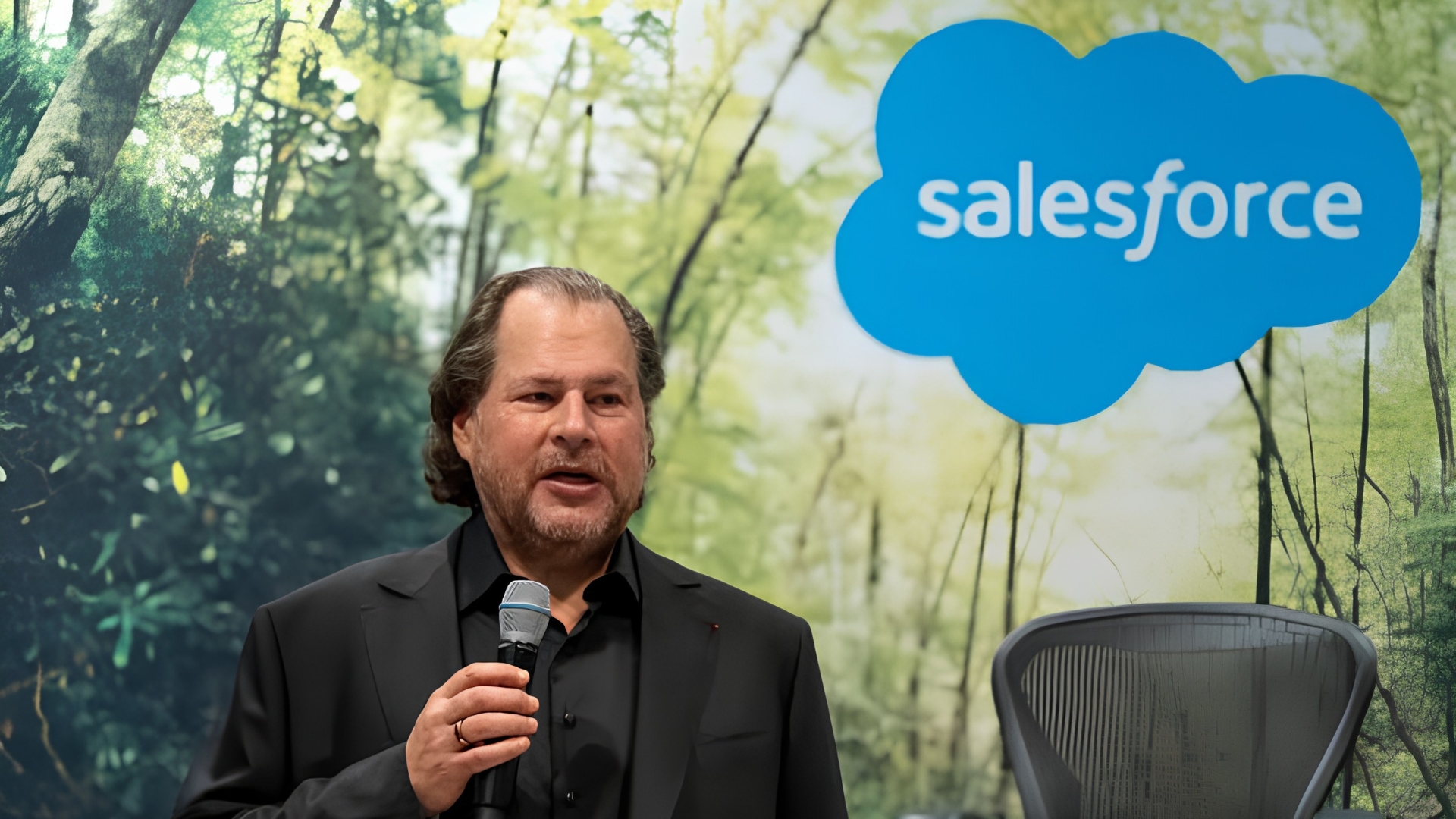
Marc Benioff, CEO of Salesforce, recently shattered this panic-driven narrative, calling the so-called SaaSpocalypse a complete fabrication.
Every major technology shift creates new winners before everyone else realizes the rules have changed.
If your organization is pulling back on cloud software under the assumption that the market is crashing, you are about to lose your competitive edge.
Here is why the SaaSpocalypse is a myth, what is actually happening in the enterprise software market, and how leaders must pivot their strategies today.
The tech industry loves a dramatic downfall.
Following the hyper-growth of 2021, where enterprise software spending surged by 20%, the subsequent market correction felt like a crash.
Companies began auditing their tech stacks, aggressively slashing redundant applications to save 10% to 15% on IT overhead.
This sparked the term "SaaSpocalypse," a viral industry belief that businesses were permanently abandoning SaaS subscriptions.
Marc Benioff recently addressed this head-on, effectively dismissing the panic as nonsense.
Instead of a dying industry, Benioff pointed to Salesforce’s robust financial performance, which recently posted 11% year-over-year revenue growth, pushing the company toward a massive $34.8 billion annual run rate.
The data simply does not support a market collapse.
What the doomsayers mistook for the death of SaaS was actually the death of shelfware—software that companies paid for but never used.
The SaaSpocalypse narrative misses the fundamental transformation happening beneath the surface of enterprise technology.
We are not witnessing a contraction; we are witnessing an evolution.
For over a decade, companies like Salesforce, Microsoft, HubSpot, and Oracle built massive empires by charging per user.
The more human employees a company hired, the more software seats they purchased.
However, the rise of generative AI, led by innovators like OpenAI and integrated deeply by Google and Meta, has completely altered this pricing dynamic.
Salesforce is answering this shift with Agentforce, a move toward autonomous AI agents that perform tasks rather than just sitting idly in a dashboard.
The industry impact here is monumental.
Software is no longer about hosting a digital workspace for a human; it is about providing an autonomous digital worker.
Competitors who fail to understand this shift—those who are still selling basic workflow tools—are the only ones who will truly experience a SaaSpocalypse.
Companies that adapt to outcome-based, AI-driven software models will capture the next $100 billion in enterprise spending.
Why does this matter for your business strategy?
Because organizations don't lose markets because competitors are bigger; they lose because competitors move faster.
The perceived SaaSpocalypse reveals three critical trends that every founder, CIO, and marketing leader must internalize immediately:
1. The End of the "Growth at All Costs" Software Sprawl
In 2020, the average enterprise deployed over 300 distinct SaaS applications. Today, leadership demands consolidation. They want one platform—like SAP or Salesforce—to act as the central nervous system, powered by integrated data.
2. AI is a Feature, Not a Replacement
Despite the hype, Marc Benioff understands that AI cannot function without a highly structured, proprietary data foundation. You cannot buy a generic AI tool from OpenAI and expect it to manage your global supply chain or customer service without the underlying SaaS infrastructure.
3. Value Over Volume
Vendors can no longer hide behind multi-year contracts for unused seats. Procurement teams are demanding measurable ROI within the first 90 days of implementation.
If your technology decision-making is currently driven by fear of a market downturn, you are solving yesterday's problem.
As we look toward the next 3 to 5 years, the conversation will shift entirely away from the SaaSpocalypse.
Instead, the race will be about who can deploy the most efficient autonomous agents.
We will see heavyweights like Amazon (via AWS), Cisco, and Adobe redesigning their core architectures to support autonomous B2B workflows.
The software market isn't shrinking; it is just growing up.
The capital that was previously wasted on redundant applications is simply being reallocated toward high-impact, AI-native SaaS platforms.
Marc Benioff is right: the SaaSpocalypse is a lie.
The enterprise software market is currently undergoing a ruthless, necessary optimization phase.
Weak products are dying, but platforms that drive undeniable, AI-powered business outcomes are thriving more than ever.
The companies adapting today will define tomorrow's market leaders.
Are you actively consolidating your tech stack to prepare for AI, or are you just cutting budgets out of fear?
Who do you think will lead this new autonomous software market over the next five years?
👉 Explore more enterprise insights and technology leadership strategies on DemandTeq.