
The battle for enterprise smartphone dominance is no longer fought over megapixel counts or screen sizes.
It is entirely about on-device AI computing.
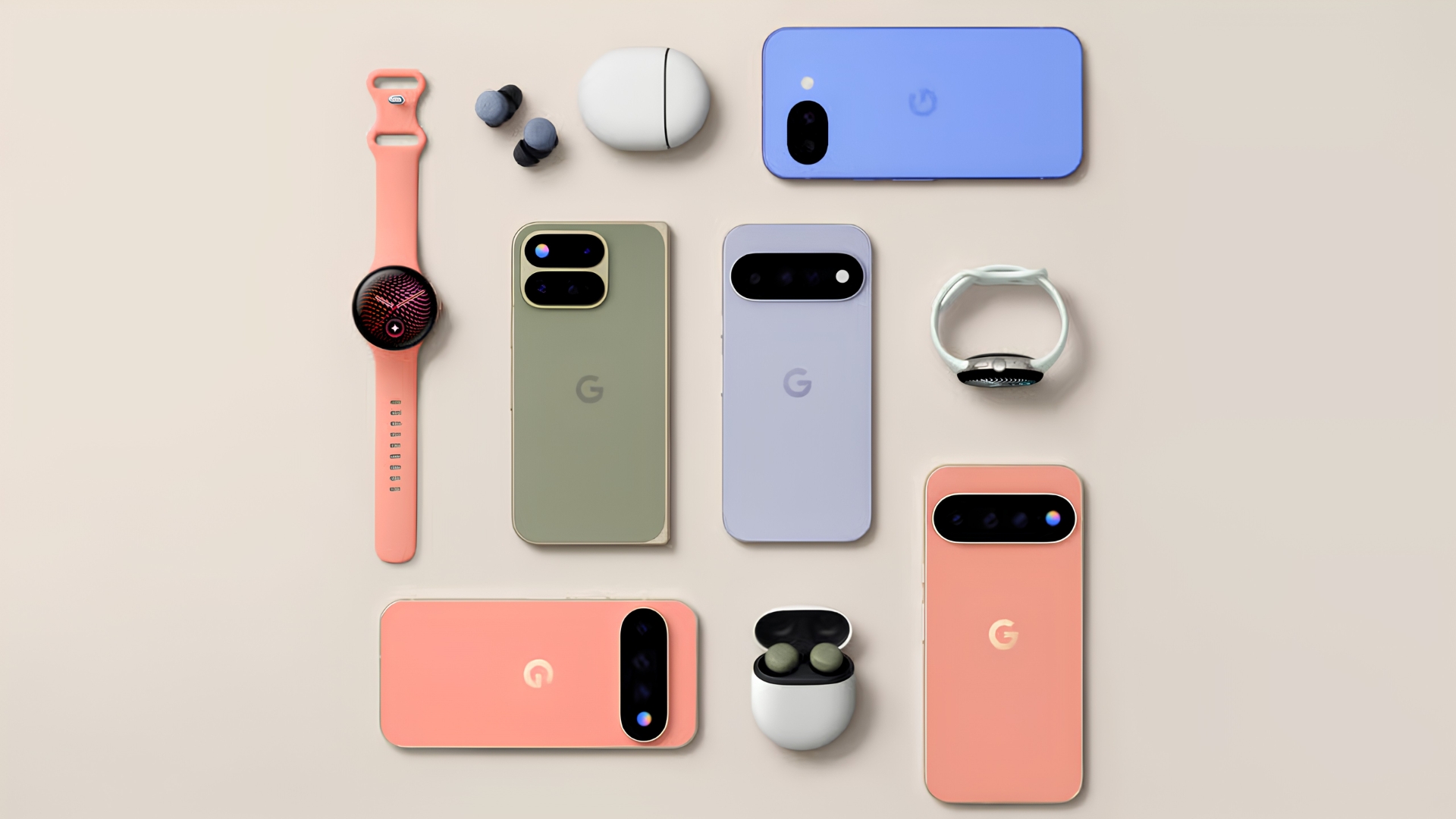
Google has officially unveiled its highly anticipated hardware lineup, releasing the Google Pixel 11, the Pixel 11 Pro, and the massive Pixel 11 Pro XL.
But viewing this merely as a consumer gadget update misses the broader strategic shift occurring in the technology sector.
This trio represents a fundamental transformation in how artificial intelligence is deployed at the edge, moving processing power out of the cloud and directly into the pockets of the global workforce.
Every major technology shift creates new winners before everyone else realizes the rules have changed.
By restructuring its flagship devices around advanced generative AI capabilities, Google is positioning itself to challenge hardware giants and redefine the standard for business mobility.
The smartphone industry has seen incremental updates for years, but this latest product cycle focuses heavily on internal architecture.
Google introduced three distinct tiers for the new generation, catering to varying levels of professional and consumer demand.
The baseline Google Pixel 11 serves as the entry point into the company’s new AI ecosystem, while the Pixel 11 Pro and the Pixel 11 Pro XL introduce enterprise-grade processing power.
Under the hood, all three devices are powered by the company’s next-generation custom Tensor processor, which boasts a 45% increase in neural processing speeds compared to the previous generation.
To support complex, on-device machine learning models, Google has increased the baseline memory configuration to 12GB of RAM for the standard model and a massive 16GB of RAM for the Pro and Pro XL variants.
Starting at Rs 799 the pricing strategy reflects a premium market positioning.
The devices also feature a localized version of the Gemini nano-model, enabling complex data analysis, instant transcription, and automated drafting without requiring an active internet connection.
The Google Pixel 11 is not just a phone; it is a portable compute node.
For enterprise IT decision-makers, the shift toward on-device AI solves one of the biggest hurdles in corporate technology: data privacy.
When employees use cloud-based AI tools, sensitive corporate data must leave the device, travel to a server, and return.
With the Pixel 11 Pro and Pixel 11 Pro XL, data processing happens locally on the silicon.
This means proprietary business data never touches the cloud, dramatically reducing the risk of compliance breaches and cyber threats.
Companies dealing with strict regulatory frameworks, such as those in healthcare or finance, now have a viable mobile platform for secure AI integration.
Furthermore, this launch fundamentally changes the total cost of ownership for enterprise mobile fleets.
By integrating hardware seamlessly with Google Workspace, the company is offering a vertically integrated ecosystem that rivals the long-standing dominance of competing enterprise platforms.
The global smartphone market, currently valued at over $500 billion, has long been a duopoly in the premium tier.
Apple and Samsung have historically controlled the lion's share of enterprise contracts and high-end consumer sales.
However, under the leadership of Sundar Pichai, Google is transitioning from a software provider into a formidable hardware competitor.
The strategy is clear: use unparalleled software and AI advantages to subsidize the hardware transition.
While competitors rely on third-party integrations—such as Apple partnering with OpenAI—Google owns the entire stack.
They control the Android operating system, the Tensor silicon, the Gemini AI models, and the physical Google Pixel 11 hardware.
This deep integration allows for hardware optimization that fragmented competitors simply cannot match.
If Google can successfully penetrate enterprise carrier contracts with the Pixel 11 Pro XL, they could siphon significant market share away from their largest rivals over the next 24 to 36 months.
As we look ahead, the definition of a "smartphone" will continue to evolve into an "intelligent edge agent."
The capabilities demonstrated by the Google Pixel 11 lineup will soon become the baseline expectation for all business-to-business communications hardware.
We can expect to see mobile device management (MDM) platforms completely rewrite their security protocols to account for on-device AI computing.
Additionally, software developers will begin building specialized B2B applications optimized specifically for the localized neural processing units found in the Pixel 11 Pro.
The race isn't about hardware specs anymore. It's about which ecosystem can make professionals more productive while keeping enterprise data secure.
The release of the Google Pixel 11, along with its high-powered siblings, marks a pivotal moment in mobile technology.
It is a signal that the era of cloud-dependent mobile computing is giving way to edge-based artificial intelligence.
For business leaders, marketers, and technology decision-makers, the lesson is clear: the tools your workforce relies on are becoming exponentially smarter, and adapting to these edge-compute capabilities is no longer optional.
The companies adapting today will define tomorrow's market leaders.