
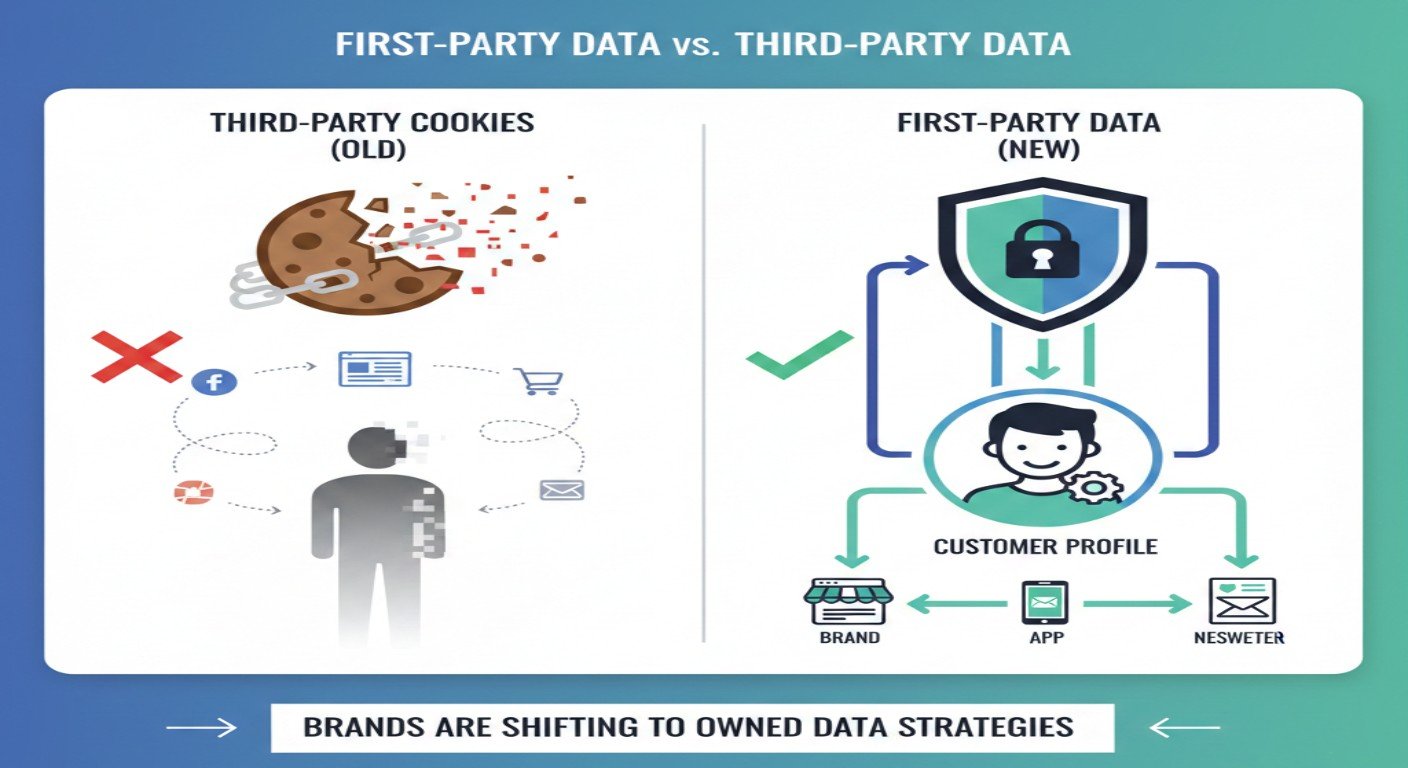
For years, digital marketing depended heavily on third-party cookies. These small tracking files helped brands follow users across websites, build audience profiles, and deliver targeted ads. However, that era is coming to an end. With major browsers like Google Chrome phasing out third-party cookies, brands now face a major shift. As a result, a first-party data strategy has become one of the most important priorities for modern businesses.
Instead of relying on external data, companies must now collect, manage, and responsibly activate their own customer data. This change is not just technical. It fundamentally transforms how marketing, personalization, and customer experience work in a privacy-first world.
Why Third-Party Cookies Are Disappearing
Third-party cookies are declining mainly because of growing privacy concerns. Over the past decade, users have become more aware of how their data is collected and used. At the same time, governments introduced strict regulations, such as the GDPR in Europe and the CCPA in the United States.
Moreover, major tech companies responded by redesigning their platforms:
- Apple blocked third-party tracking in Safari and iOS.
- Firefox followed with similar restrictions.
- Google announced the full phase-out of third-party cookies in Chrome.
Consequently, marketers can no longer depend on invisible tracking across the web. They must shift toward transparent, consent-based data collection.
What Is First-Party Data?
First-party data refers to information that a business collects directly from its own users. This includes:
- Website behavior (pages visited, actions taken)
- Email interactions
- CRM data
- App usage
- Purchase history
- Customer feedback and surveys
Unlike third-party data, this information comes from direct relationships. Therefore, it is more accurate, more trustworthy, and fully compliant with privacy regulations when collected correctly.
A strong first-party data strategy focuses on building long-term customer relationships instead of short-term tracking.
Why First-Party Data Is More Valuable
First-party data offers several clear advantages:
1. Better Data Quality
Since the data comes directly from users, it is more reliable and relevant. There is no dependency on external data brokers.
2. Privacy Compliance
Because users willingly share the data, brands can easily meet regulatory requirements.
3. Stronger Personalization
Brands can deliver meaningful experiences based on real behavior instead of assumptions.
4. Long-Term Sustainability
Unlike third-party cookies, first-party data will not disappear due to browser policies.
In other words, first-party data is not just a replacement. It is actually a more powerful foundation for modern marketing.
How Brands Are Building First-Party Data Strategies
Successful organizations are actively redesigning their data systems. Most strategies include the following components:
1. Customer Data Platforms (CDPs)
CDPs centralize data from websites, apps, CRM systems, and marketing tools. This creates a unified customer profile.
2. Consent Management
Brands now use consent platforms to clearly explain how data is collected and give users control.
3. Value Exchange
Companies encourage users to share data by offering value, such as:
- Personalized content
- Loyalty programs
- Exclusive access
- Better customer support
4. Server-Side Tracking
Instead of tracking users through browsers, brands move analytics to server-side systems. This reduces dependency on cookies and improves data accuracy.
As a result, first-party data becomes a strategic business asset, not just a marketing tool.
Challenges in First-Party Data Adoption
Although first-party data is powerful, it also brings challenges:
- Data silos across departments
- Integration complexity
- Lack of internal data skills
- Maintaining user trust
However, companies that invest early in data governance, security, and transparency gain a significant competitive advantage.
The Future of Marketing Without Cookies
The future of digital marketing will revolve around:
- Consent-driven personalization
- Ethical data usage
- AI-powered insights based on owned data
- Deeper customer relationships
In fact, the end of third-party cookies marks the beginning of a more sustainable marketing model. Brands no longer need to chase users across the internet. Instead, they can build direct, trusted relationships.
Conclusion
The death of third-party cookies is not a crisis. It is an opportunity. A well-designed first-party data strategy helps brands gain better insights, improve personalization, and stay compliant with global privacy laws. More importantly, it builds long-term trust with customers.
In a world where privacy matters more than ever, first-party data is not just the future of marketing, it is the only sustainable path forward.

There is definately a lot to find out about this subject. I like all the points you made